Home
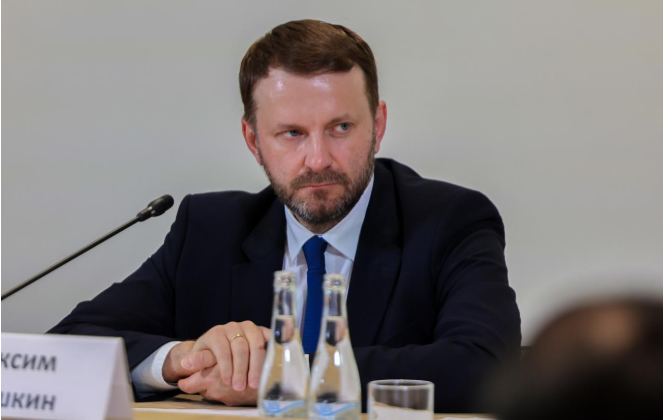
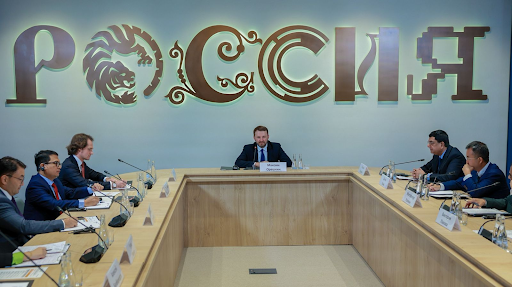
An expert session within the Open Dialogue project took place on September 5 at the
National Centre "Russia"
branch in Primorsky Krai. Authoritative international experts participated in the discussion on the transformation of trade and connectivity in the new reality. The event continued themes from the first Open Dialogue "Future of the World. New Platform for Global Growth," held in April 2025 in Moscow.
Associate Professor Gulshan Sachdeva, at the School of International Studies at Jawaharlal Nehru University, stated during the Open Dialogue that today's Global Majority countries are no longer the "Third World," but rather new powerful centers of political, economic, and intellectual development.
"If we're talking about the global majority and the Global South, the situation today is completely different. We have grown strategically, economically, technologically, and even intellectually. These countries now dominate and are likely to continue dominating in trade, investments, technologies, climate issues, and other areas. And even if you look just at BRICS—already now the GDP growth rate is 4%, and by 2030 this share will exceed 50%," stated Gulshan Sachdeva.
Technological innovations (digital payments, AI) demonstrate the potential of Global Majority countries. But the key challenge is organizing joint architecture and connectivity infrastructure without Western dominance, emphasized the Associate Professor at the School of International Studies at Jawaharlal Nehru University.
He also noted that using institutions, trade mechanisms, and currencies as "weapons" erodes the stability of the world order. Gulshan Sachdeva is convinced that alternative solutions are needed within BRICS and beyond.
Western partners still maintain a sense of impunity and the role of sole decisive players, believes Victoria Panova, Head of the BRICS-Russia Expert Council, Vice-Rector of HSE University, and Russia's Sherpa in the Women's Twenty. According to her, the financial levers of Western institutions—the dollar payment system, London insurance structures, control over container shipping—effectively give them an advantage and the illusion of the right to conduct dialogue as masters.
"In this context, the role of BRICS is truly invaluable. Despite attempts by Western colleagues to undermine the association, BRICS has proven its relevance and ability to offer new initiatives not only in the economic and financial spheres but across all three pillars of cooperation. Interdependence between countries remains, including with the West, the EU, and the USA, but a new, more multipolar economy is already forming. If you look at the statistics: since the first summit, trade turnover within BRICS countries has grown 3.5 times—this is objective evidence that participants are actively cooperating and can contribute to mutual growth, reducing dependence on Western powers," she emphasized.
BRICS countries are establishing new institutions and mechanisms that enable participants to enhance their economic independence. One such project is the Contingent Reserve Arrangement. According to Victoria Panova, it still requires refinement but already demonstrates the association's aspiration to diversify financial instruments and reduce dependence on Western structures.
"The New Development Bank of BRICS has already launched practical initiatives: bonds have been issued in yuan and rand, with rupee issuance in preparation. Today, about 30% of the bank's operations are conducted in national currencies. An investment package of about 35 billion dollars is aimed at reducing the infrastructure gap in Global South countries and supporting their long-term development," she emphasized.
BRICS is gradually ensuring the leveling of international architecture, refraining from interfering in the logic of sanctions or counter-sanctions, but rather through practical initiatives that help countries implement their development plans and protect the interests of their citizens, added Victoria Panova.
Open Dialogue participants also discussed attracting investments in the International North-South Transport Corridor, BRICS+ routes, continental railway projects, as well as international logistics challenges and measures to strengthen ties between the EAEU, Africa, and ASEAN.
Alexey Bezborodov, Managing Partner of Infra Projects LLC, spoke on the topic "New Solutions for Enhancing Logistics Connectivity of BRICS Countries." He noted that the world has entered the era of containerization and that the container will become the basic unit of global trade in non-energy sectors. The expert also stated that Russia is capable of playing a key role in transit within BRICS, particularly through infrastructure development along the Trans-Siberian Railway and the North-South corridor, which becomes strategically important for China and India.
"Today, fragmentation, containerization, local economic spurts, and e-commerce allow us to say that there is a shift in perceptions of geography, cargo movement speeds, methods of final delivery, and cooperation options in production. Essentially, a quiet revolution is occurring in infrastructure and logistics," stated Alexey Bezborodov.
At the same time, he emphasized that today's infrastructure development "consumes enormous resources" from all states, and new or modernized facilities are not always durable. Often, they exhaust their potential within 5 to 10 years.
"Therefore, we need to think about new principles of movement—based on small atom, new pipe transportation of goods, new physics and energy," noted Alexey Bezborodov.
The expert emphasized that several trade and logistics routes are successfully developing in Russia. These include the Northern Sea Route and the Transarctic Transport Corridor. There is also an essential project for joint investments—the North Siberian Railway, which, with the creation of additional links, can connect the October, Northern, Sverdlovsk, and West Siberian railways.
"First and foremost, we must continue developing our standard classical transit from China through Kazakhstan, Russia, Belarus to Europe. It exists now and brings income to all participants," he noted.
Fashion
An expert session within the Open Dialogue project took place on September 5 at the
National Centre "Russia"
branch in Primorsky Krai. Authoritative international experts participated in the discussion on the transformation of trade and connectivity in the new reality. The event continued themes from the first Open Dialogue "Future of the World. New Platform for Global Growth," held in April 2025 in Moscow.
Associate Professor Gulshan Sachdeva, at the School of International Studies at Jawaharlal Nehru University, stated during the Open Dialogue that today's Global Majority countries are no longer the "Third World," but rather new powerful centers of political, economic, and intellectual development.
"If we're talking about the global majority and the Global South, the situation today is completely different. We have grown strategically, economically, technologically, and even intellectually. These countries now dominate and are likely to continue dominating in trade, investments, technologies, climate issues, and other areas. And even if you look just at BRICS—already now the GDP growth rate is 4%, and by 2030 this share will exceed 50%," stated Gulshan Sachdeva.
Technological innovations (digital payments, AI) demonstrate the potential of Global Majority countries. But the key challenge is organizing joint architecture and connectivity infrastructure without Western dominance, emphasized the Associate Professor at the School of International Studies at Jawaharlal Nehru University.
He also noted that using institutions, trade mechanisms, and currencies as "weapons" erodes the stability of the world order. Gulshan Sachdeva is convinced that alternative solutions are needed within BRICS and beyond.
Western partners still maintain a sense of impunity and the role of sole decisive players, believes Victoria Panova, Head of the BRICS-Russia Expert Council, Vice-Rector of HSE University, and Russia's Sherpa in the Women's Twenty. According to her, the financial levers of Western institutions—the dollar payment system, London insurance structures, control over container shipping—effectively give them an advantage and the illusion of the right to conduct dialogue as masters.
"In this context, the role of BRICS is truly invaluable. Despite attempts by Western colleagues to undermine the association, BRICS has proven its relevance and ability to offer new initiatives not only in the economic and financial spheres but across all three pillars of cooperation. Interdependence between countries remains, including with the West, the EU, and the USA, but a new, more multipolar economy is already forming. If you look at the statistics: since the first summit, trade turnover within BRICS countries has grown 3.5 times—this is objective evidence that participants are actively cooperating and can contribute to mutual growth, reducing dependence on Western powers," she emphasized.
BRICS countries are establishing new institutions and mechanisms that enable participants to enhance their economic independence. One such project is the Contingent Reserve Arrangement. According to Victoria Panova, it still requires refinement but already demonstrates the association's aspiration to diversify financial instruments and reduce dependence on Western structures.
"The New Development Bank of BRICS has already launched practical initiatives: bonds have been issued in yuan and rand, with rupee issuance in preparation. Today, about 30% of the bank's operations are conducted in national currencies. An investment package of about 35 billion dollars is aimed at reducing the infrastructure gap in Global South countries and supporting their long-term development," she emphasized.
BRICS is gradually ensuring the leveling of international architecture, refraining from interfering in the logic of sanctions or counter-sanctions, but rather through practical initiatives that help countries implement their development plans and protect the interests of their citizens, added Victoria Panova.
Open Dialogue participants also discussed attracting investments in the International North-South Transport Corridor, BRICS+ routes, continental railway projects, as well as international logistics challenges and measures to strengthen ties between the EAEU, Africa, and ASEAN.
Alexey Bezborodov, Managing Partner of Infra Projects LLC, spoke on the topic "New Solutions for Enhancing Logistics Connectivity of BRICS Countries." He noted that the world has entered the era of containerization and that the container will become the basic unit of global trade in non-energy sectors. The expert also stated that Russia is capable of playing a key role in transit within BRICS, particularly through infrastructure development along the Trans-Siberian Railway and the North-South corridor, which becomes strategically important for China and India.
"Today, fragmentation, containerization, local economic spurts, and e-commerce allow us to say that there is a shift in perceptions of geography, cargo movement speeds, methods of final delivery, and cooperation options in production. Essentially, a quiet revolution is occurring in infrastructure and logistics," stated Alexey Bezborodov.
At the same time, he emphasized that today's infrastructure development "consumes enormous resources" from all states, and new or modernized facilities are not always durable. Often, they exhaust their potential within 5 to 10 years.
"Therefore, we need to think about new principles of movement—based on small atom, new pipe transportation of goods, new physics and energy," noted Alexey Bezborodov.
The expert emphasized that several trade and logistics routes are successfully developing in Russia. These include the Northern Sea Route and the Transarctic Transport Corridor. There is also an essential project for joint investments—the North Siberian Railway, which, with the creation of additional links, can connect the October, Northern, Sverdlovsk, and West Siberian railways.
"First and foremost, we must continue developing our standard classical transit from China through Kazakhstan, Russia, Belarus to Europe. It exists now and brings income to all participants," he noted.
General News
An expert session within the Open Dialogue project took place on September 5 at the
National Centre "Russia"
branch in Primorsky Krai. Authoritative international experts participated in the discussion on the transformation of trade and connectivity in the new reality. The event continued themes from the first Open Dialogue "Future of the World. New Platform for Global Growth," held in April 2025 in Moscow.
Associate Professor Gulshan Sachdeva, at the School of International Studies at Jawaharlal Nehru University, stated during the Open Dialogue that today's Global Majority countries are no longer the "Third World," but rather new powerful centers of political, economic, and intellectual development.
"If we're talking about the global majority and the Global South, the situation today is completely different. We have grown strategically, economically, technologically, and even intellectually. These countries now dominate and are likely to continue dominating in trade, investments, technologies, climate issues, and other areas. And even if you look just at BRICS—already now the GDP growth rate is 4%, and by 2030 this share will exceed 50%," stated Gulshan Sachdeva.
Technological innovations (digital payments, AI) demonstrate the potential of Global Majority countries. But the key challenge is organizing joint architecture and connectivity infrastructure without Western dominance, emphasized the Associate Professor at the School of International Studies at Jawaharlal Nehru University.
He also noted that using institutions, trade mechanisms, and currencies as "weapons" erodes the stability of the world order. Gulshan Sachdeva is convinced that alternative solutions are needed within BRICS and beyond.
Western partners still maintain a sense of impunity and the role of sole decisive players, believes Victoria Panova, Head of the BRICS-Russia Expert Council, Vice-Rector of HSE University, and Russia's Sherpa in the Women's Twenty. According to her, the financial levers of Western institutions—the dollar payment system, London insurance structures, control over container shipping—effectively give them an advantage and the illusion of the right to conduct dialogue as masters.
"In this context, the role of BRICS is truly invaluable. Despite attempts by Western colleagues to undermine the association, BRICS has proven its relevance and ability to offer new initiatives not only in the economic and financial spheres but across all three pillars of cooperation. Interdependence between countries remains, including with the West, the EU, and the USA, but a new, more multipolar economy is already forming. If you look at the statistics: since the first summit, trade turnover within BRICS countries has grown 3.5 times—this is objective evidence that participants are actively cooperating and can contribute to mutual growth, reducing dependence on Western powers," she emphasized.
BRICS countries are establishing new institutions and mechanisms that enable participants to enhance their economic independence. One such project is the Contingent Reserve Arrangement. According to Victoria Panova, it still requires refinement but already demonstrates the association's aspiration to diversify financial instruments and reduce dependence on Western structures.
"The New Development Bank of BRICS has already launched practical initiatives: bonds have been issued in yuan and rand, with rupee issuance in preparation. Today, about 30% of the bank's operations are conducted in national currencies. An investment package of about 35 billion dollars is aimed at reducing the infrastructure gap in Global South countries and supporting their long-term development," she emphasized.
BRICS is gradually ensuring the leveling of international architecture, refraining from interfering in the logic of sanctions or counter-sanctions, but rather through practical initiatives that help countries implement their development plans and protect the interests of their citizens, added Victoria Panova.
Open Dialogue participants also discussed attracting investments in the International North-South Transport Corridor, BRICS+ routes, continental railway projects, as well as international logistics challenges and measures to strengthen ties between the EAEU, Africa, and ASEAN.
Alexey Bezborodov, Managing Partner of Infra Projects LLC, spoke on the topic "New Solutions for Enhancing Logistics Connectivity of BRICS Countries." He noted that the world has entered the era of containerization and that the container will become the basic unit of global trade in non-energy sectors. The expert also stated that Russia is capable of playing a key role in transit within BRICS, particularly through infrastructure development along the Trans-Siberian Railway and the North-South corridor, which becomes strategically important for China and India.
"Today, fragmentation, containerization, local economic spurts, and e-commerce allow us to say that there is a shift in perceptions of geography, cargo movement speeds, methods of final delivery, and cooperation options in production. Essentially, a quiet revolution is occurring in infrastructure and logistics," stated Alexey Bezborodov.
At the same time, he emphasized that today's infrastructure development "consumes enormous resources" from all states, and new or modernized facilities are not always durable. Often, they exhaust their potential within 5 to 10 years.
"Therefore, we need to think about new principles of movement—based on small atom, new pipe transportation of goods, new physics and energy," noted Alexey Bezborodov.
The expert emphasized that several trade and logistics routes are successfully developing in Russia. These include the Northern Sea Route and the Transarctic Transport Corridor. There is also an essential project for joint investments—the North Siberian Railway, which, with the creation of additional links, can connect the October, Northern, Sverdlovsk, and West Siberian railways.
"First and foremost, we must continue developing our standard classical transit from China through Kazakhstan, Russia, Belarus to Europe. It exists now and brings income to all participants," he noted.
Health
An expert session within the Open Dialogue project took place on September 5 at the
National Centre "Russia"
branch in Primorsky Krai. Authoritative international experts participated in the discussion on the transformation of trade and connectivity in the new reality. The event continued themes from the first Open Dialogue "Future of the World. New Platform for Global Growth," held in April 2025 in Moscow.
Associate Professor Gulshan Sachdeva, at the School of International Studies at Jawaharlal Nehru University, stated during the Open Dialogue that today's Global Majority countries are no longer the "Third World," but rather new powerful centers of political, economic, and intellectual development.
"If we're talking about the global majority and the Global South, the situation today is completely different. We have grown strategically, economically, technologically, and even intellectually. These countries now dominate and are likely to continue dominating in trade, investments, technologies, climate issues, and other areas. And even if you look just at BRICS—already now the GDP growth rate is 4%, and by 2030 this share will exceed 50%," stated Gulshan Sachdeva.
Technological innovations (digital payments, AI) demonstrate the potential of Global Majority countries. But the key challenge is organizing joint architecture and connectivity infrastructure without Western dominance, emphasized the Associate Professor at the School of International Studies at Jawaharlal Nehru University.
He also noted that using institutions, trade mechanisms, and currencies as "weapons" erodes the stability of the world order. Gulshan Sachdeva is convinced that alternative solutions are needed within BRICS and beyond.
Western partners still maintain a sense of impunity and the role of sole decisive players, believes Victoria Panova, Head of the BRICS-Russia Expert Council, Vice-Rector of HSE University, and Russia's Sherpa in the Women's Twenty. According to her, the financial levers of Western institutions—the dollar payment system, London insurance structures, control over container shipping—effectively give them an advantage and the illusion of the right to conduct dialogue as masters.
"In this context, the role of BRICS is truly invaluable. Despite attempts by Western colleagues to undermine the association, BRICS has proven its relevance and ability to offer new initiatives not only in the economic and financial spheres but across all three pillars of cooperation. Interdependence between countries remains, including with the West, the EU, and the USA, but a new, more multipolar economy is already forming. If you look at the statistics: since the first summit, trade turnover within BRICS countries has grown 3.5 times—this is objective evidence that participants are actively cooperating and can contribute to mutual growth, reducing dependence on Western powers," she emphasized.
BRICS countries are establishing new institutions and mechanisms that enable participants to enhance their economic independence. One such project is the Contingent Reserve Arrangement. According to Victoria Panova, it still requires refinement but already demonstrates the association's aspiration to diversify financial instruments and reduce dependence on Western structures.
"The New Development Bank of BRICS has already launched practical initiatives: bonds have been issued in yuan and rand, with rupee issuance in preparation. Today, about 30% of the bank's operations are conducted in national currencies. An investment package of about 35 billion dollars is aimed at reducing the infrastructure gap in Global South countries and supporting their long-term development," she emphasized.
BRICS is gradually ensuring the leveling of international architecture, refraining from interfering in the logic of sanctions or counter-sanctions, but rather through practical initiatives that help countries implement their development plans and protect the interests of their citizens, added Victoria Panova.
Open Dialogue participants also discussed attracting investments in the International North-South Transport Corridor, BRICS+ routes, continental railway projects, as well as international logistics challenges and measures to strengthen ties between the EAEU, Africa, and ASEAN.
Alexey Bezborodov, Managing Partner of Infra Projects LLC, spoke on the topic "New Solutions for Enhancing Logistics Connectivity of BRICS Countries." He noted that the world has entered the era of containerization and that the container will become the basic unit of global trade in non-energy sectors. The expert also stated that Russia is capable of playing a key role in transit within BRICS, particularly through infrastructure development along the Trans-Siberian Railway and the North-South corridor, which becomes strategically important for China and India.
"Today, fragmentation, containerization, local economic spurts, and e-commerce allow us to say that there is a shift in perceptions of geography, cargo movement speeds, methods of final delivery, and cooperation options in production. Essentially, a quiet revolution is occurring in infrastructure and logistics," stated Alexey Bezborodov.
At the same time, he emphasized that today's infrastructure development "consumes enormous resources" from all states, and new or modernized facilities are not always durable. Often, they exhaust their potential within 5 to 10 years.
"Therefore, we need to think about new principles of movement—based on small atom, new pipe transportation of goods, new physics and energy," noted Alexey Bezborodov.
The expert emphasized that several trade and logistics routes are successfully developing in Russia. These include the Northern Sea Route and the Transarctic Transport Corridor. There is also an essential project for joint investments—the North Siberian Railway, which, with the creation of additional links, can connect the October, Northern, Sverdlovsk, and West Siberian railways.
"First and foremost, we must continue developing our standard classical transit from China through Kazakhstan, Russia, Belarus to Europe. It exists now and brings income to all participants," he noted.
Lifestyle
An expert session within the Open Dialogue project took place on September 5 at the
National Centre "Russia"
branch in Primorsky Krai. Authoritative international experts participated in the discussion on the transformation of trade and connectivity in the new reality. The event continued themes from the first Open Dialogue "Future of the World. New Platform for Global Growth," held in April 2025 in Moscow.
Associate Professor Gulshan Sachdeva, at the School of International Studies at Jawaharlal Nehru University, stated during the Open Dialogue that today's Global Majority countries are no longer the "Third World," but rather new powerful centers of political, economic, and intellectual development.
"If we're talking about the global majority and the Global South, the situation today is completely different. We have grown strategically, economically, technologically, and even intellectually. These countries now dominate and are likely to continue dominating in trade, investments, technologies, climate issues, and other areas. And even if you look just at BRICS—already now the GDP growth rate is 4%, and by 2030 this share will exceed 50%," stated Gulshan Sachdeva.
Technological innovations (digital payments, AI) demonstrate the potential of Global Majority countries. But the key challenge is organizing joint architecture and connectivity infrastructure without Western dominance, emphasized the Associate Professor at the School of International Studies at Jawaharlal Nehru University.
He also noted that using institutions, trade mechanisms, and currencies as "weapons" erodes the stability of the world order. Gulshan Sachdeva is convinced that alternative solutions are needed within BRICS and beyond.
Western partners still maintain a sense of impunity and the role of sole decisive players, believes Victoria Panova, Head of the BRICS-Russia Expert Council, Vice-Rector of HSE University, and Russia's Sherpa in the Women's Twenty. According to her, the financial levers of Western institutions—the dollar payment system, London insurance structures, control over container shipping—effectively give them an advantage and the illusion of the right to conduct dialogue as masters.
"In this context, the role of BRICS is truly invaluable. Despite attempts by Western colleagues to undermine the association, BRICS has proven its relevance and ability to offer new initiatives not only in the economic and financial spheres but across all three pillars of cooperation. Interdependence between countries remains, including with the West, the EU, and the USA, but a new, more multipolar economy is already forming. If you look at the statistics: since the first summit, trade turnover within BRICS countries has grown 3.5 times—this is objective evidence that participants are actively cooperating and can contribute to mutual growth, reducing dependence on Western powers," she emphasized.
BRICS countries are establishing new institutions and mechanisms that enable participants to enhance their economic independence. One such project is the Contingent Reserve Arrangement. According to Victoria Panova, it still requires refinement but already demonstrates the association's aspiration to diversify financial instruments and reduce dependence on Western structures.
"The New Development Bank of BRICS has already launched practical initiatives: bonds have been issued in yuan and rand, with rupee issuance in preparation. Today, about 30% of the bank's operations are conducted in national currencies. An investment package of about 35 billion dollars is aimed at reducing the infrastructure gap in Global South countries and supporting their long-term development," she emphasized.
BRICS is gradually ensuring the leveling of international architecture, refraining from interfering in the logic of sanctions or counter-sanctions, but rather through practical initiatives that help countries implement their development plans and protect the interests of their citizens, added Victoria Panova.
Open Dialogue participants also discussed attracting investments in the International North-South Transport Corridor, BRICS+ routes, continental railway projects, as well as international logistics challenges and measures to strengthen ties between the EAEU, Africa, and ASEAN.
Alexey Bezborodov, Managing Partner of Infra Projects LLC, spoke on the topic "New Solutions for Enhancing Logistics Connectivity of BRICS Countries." He noted that the world has entered the era of containerization and that the container will become the basic unit of global trade in non-energy sectors. The expert also stated that Russia is capable of playing a key role in transit within BRICS, particularly through infrastructure development along the Trans-Siberian Railway and the North-South corridor, which becomes strategically important for China and India.
"Today, fragmentation, containerization, local economic spurts, and e-commerce allow us to say that there is a shift in perceptions of geography, cargo movement speeds, methods of final delivery, and cooperation options in production. Essentially, a quiet revolution is occurring in infrastructure and logistics," stated Alexey Bezborodov.
At the same time, he emphasized that today's infrastructure development "consumes enormous resources" from all states, and new or modernized facilities are not always durable. Often, they exhaust their potential within 5 to 10 years.
"Therefore, we need to think about new principles of movement—based on small atom, new pipe transportation of goods, new physics and energy," noted Alexey Bezborodov.
The expert emphasized that several trade and logistics routes are successfully developing in Russia. These include the Northern Sea Route and the Transarctic Transport Corridor. There is also an essential project for joint investments—the North Siberian Railway, which, with the creation of additional links, can connect the October, Northern, Sverdlovsk, and West Siberian railways.
"First and foremost, we must continue developing our standard classical transit from China through Kazakhstan, Russia, Belarus to Europe. It exists now and brings income to all participants," he noted.
Arts & Entertainment
An expert session within the Open Dialogue project took place on September 5 at the
National Centre "Russia"
branch in Primorsky Krai. Authoritative international experts participated in the discussion on the transformation of trade and connectivity in the new reality. The event continued themes from the first Open Dialogue "Future of the World. New Platform for Global Growth," held in April 2025 in Moscow.
Associate Professor Gulshan Sachdeva, at the School of International Studies at Jawaharlal Nehru University, stated during the Open Dialogue that today's Global Majority countries are no longer the "Third World," but rather new powerful centers of political, economic, and intellectual development.
"If we're talking about the global majority and the Global South, the situation today is completely different. We have grown strategically, economically, technologically, and even intellectually. These countries now dominate and are likely to continue dominating in trade, investments, technologies, climate issues, and other areas. And even if you look just at BRICS—already now the GDP growth rate is 4%, and by 2030 this share will exceed 50%," stated Gulshan Sachdeva.
Technological innovations (digital payments, AI) demonstrate the potential of Global Majority countries. But the key challenge is organizing joint architecture and connectivity infrastructure without Western dominance, emphasized the Associate Professor at the School of International Studies at Jawaharlal Nehru University.
He also noted that using institutions, trade mechanisms, and currencies as "weapons" erodes the stability of the world order. Gulshan Sachdeva is convinced that alternative solutions are needed within BRICS and beyond.
Western partners still maintain a sense of impunity and the role of sole decisive players, believes Victoria Panova, Head of the BRICS-Russia Expert Council, Vice-Rector of HSE University, and Russia's Sherpa in the Women's Twenty. According to her, the financial levers of Western institutions—the dollar payment system, London insurance structures, control over container shipping—effectively give them an advantage and the illusion of the right to conduct dialogue as masters.
"In this context, the role of BRICS is truly invaluable. Despite attempts by Western colleagues to undermine the association, BRICS has proven its relevance and ability to offer new initiatives not only in the economic and financial spheres but across all three pillars of cooperation. Interdependence between countries remains, including with the West, the EU, and the USA, but a new, more multipolar economy is already forming. If you look at the statistics: since the first summit, trade turnover within BRICS countries has grown 3.5 times—this is objective evidence that participants are actively cooperating and can contribute to mutual growth, reducing dependence on Western powers," she emphasized.
BRICS countries are establishing new institutions and mechanisms that enable participants to enhance their economic independence. One such project is the Contingent Reserve Arrangement. According to Victoria Panova, it still requires refinement but already demonstrates the association's aspiration to diversify financial instruments and reduce dependence on Western structures.
"The New Development Bank of BRICS has already launched practical initiatives: bonds have been issued in yuan and rand, with rupee issuance in preparation. Today, about 30% of the bank's operations are conducted in national currencies. An investment package of about 35 billion dollars is aimed at reducing the infrastructure gap in Global South countries and supporting their long-term development," she emphasized.
BRICS is gradually ensuring the leveling of international architecture, refraining from interfering in the logic of sanctions or counter-sanctions, but rather through practical initiatives that help countries implement their development plans and protect the interests of their citizens, added Victoria Panova.
Open Dialogue participants also discussed attracting investments in the International North-South Transport Corridor, BRICS+ routes, continental railway projects, as well as international logistics challenges and measures to strengthen ties between the EAEU, Africa, and ASEAN.
Alexey Bezborodov, Managing Partner of Infra Projects LLC, spoke on the topic "New Solutions for Enhancing Logistics Connectivity of BRICS Countries." He noted that the world has entered the era of containerization and that the container will become the basic unit of global trade in non-energy sectors. The expert also stated that Russia is capable of playing a key role in transit within BRICS, particularly through infrastructure development along the Trans-Siberian Railway and the North-South corridor, which becomes strategically important for China and India.
"Today, fragmentation, containerization, local economic spurts, and e-commerce allow us to say that there is a shift in perceptions of geography, cargo movement speeds, methods of final delivery, and cooperation options in production. Essentially, a quiet revolution is occurring in infrastructure and logistics," stated Alexey Bezborodov.
At the same time, he emphasized that today's infrastructure development "consumes enormous resources" from all states, and new or modernized facilities are not always durable. Often, they exhaust their potential within 5 to 10 years.
"Therefore, we need to think about new principles of movement—based on small atom, new pipe transportation of goods, new physics and energy," noted Alexey Bezborodov.
The expert emphasized that several trade and logistics routes are successfully developing in Russia. These include the Northern Sea Route and the Transarctic Transport Corridor. There is also an essential project for joint investments—the North Siberian Railway, which, with the creation of additional links, can connect the October, Northern, Sverdlovsk, and West Siberian railways.
"First and foremost, we must continue developing our standard classical transit from China through Kazakhstan, Russia, Belarus to Europe. It exists now and brings income to all participants," he noted.
Technology
An expert session within the Open Dialogue project took place on September 5 at the
National Centre "Russia"
branch in Primorsky Krai. Authoritative international experts participated in the discussion on the transformation of trade and connectivity in the new reality. The event continued themes from the first Open Dialogue "Future of the World. New Platform for Global Growth," held in April 2025 in Moscow.
Associate Professor Gulshan Sachdeva, at the School of International Studies at Jawaharlal Nehru University, stated during the Open Dialogue that today's Global Majority countries are no longer the "Third World," but rather new powerful centers of political, economic, and intellectual development.
"If we're talking about the global majority and the Global South, the situation today is completely different. We have grown strategically, economically, technologically, and even intellectually. These countries now dominate and are likely to continue dominating in trade, investments, technologies, climate issues, and other areas. And even if you look just at BRICS—already now the GDP growth rate is 4%, and by 2030 this share will exceed 50%," stated Gulshan Sachdeva.
Technological innovations (digital payments, AI) demonstrate the potential of Global Majority countries. But the key challenge is organizing joint architecture and connectivity infrastructure without Western dominance, emphasized the Associate Professor at the School of International Studies at Jawaharlal Nehru University.
He also noted that using institutions, trade mechanisms, and currencies as "weapons" erodes the stability of the world order. Gulshan Sachdeva is convinced that alternative solutions are needed within BRICS and beyond.
Western partners still maintain a sense of impunity and the role of sole decisive players, believes Victoria Panova, Head of the BRICS-Russia Expert Council, Vice-Rector of HSE University, and Russia's Sherpa in the Women's Twenty. According to her, the financial levers of Western institutions—the dollar payment system, London insurance structures, control over container shipping—effectively give them an advantage and the illusion of the right to conduct dialogue as masters.
"In this context, the role of BRICS is truly invaluable. Despite attempts by Western colleagues to undermine the association, BRICS has proven its relevance and ability to offer new initiatives not only in the economic and financial spheres but across all three pillars of cooperation. Interdependence between countries remains, including with the West, the EU, and the USA, but a new, more multipolar economy is already forming. If you look at the statistics: since the first summit, trade turnover within BRICS countries has grown 3.5 times—this is objective evidence that participants are actively cooperating and can contribute to mutual growth, reducing dependence on Western powers," she emphasized.
BRICS countries are establishing new institutions and mechanisms that enable participants to enhance their economic independence. One such project is the Contingent Reserve Arrangement. According to Victoria Panova, it still requires refinement but already demonstrates the association's aspiration to diversify financial instruments and reduce dependence on Western structures.
"The New Development Bank of BRICS has already launched practical initiatives: bonds have been issued in yuan and rand, with rupee issuance in preparation. Today, about 30% of the bank's operations are conducted in national currencies. An investment package of about 35 billion dollars is aimed at reducing the infrastructure gap in Global South countries and supporting their long-term development," she emphasized.
BRICS is gradually ensuring the leveling of international architecture, refraining from interfering in the logic of sanctions or counter-sanctions, but rather through practical initiatives that help countries implement their development plans and protect the interests of their citizens, added Victoria Panova.
Open Dialogue participants also discussed attracting investments in the International North-South Transport Corridor, BRICS+ routes, continental railway projects, as well as international logistics challenges and measures to strengthen ties between the EAEU, Africa, and ASEAN.
Alexey Bezborodov, Managing Partner of Infra Projects LLC, spoke on the topic "New Solutions for Enhancing Logistics Connectivity of BRICS Countries." He noted that the world has entered the era of containerization and that the container will become the basic unit of global trade in non-energy sectors. The expert also stated that Russia is capable of playing a key role in transit within BRICS, particularly through infrastructure development along the Trans-Siberian Railway and the North-South corridor, which becomes strategically important for China and India.
"Today, fragmentation, containerization, local economic spurts, and e-commerce allow us to say that there is a shift in perceptions of geography, cargo movement speeds, methods of final delivery, and cooperation options in production. Essentially, a quiet revolution is occurring in infrastructure and logistics," stated Alexey Bezborodov.
At the same time, he emphasized that today's infrastructure development "consumes enormous resources" from all states, and new or modernized facilities are not always durable. Often, they exhaust their potential within 5 to 10 years.
"Therefore, we need to think about new principles of movement—based on small atom, new pipe transportation of goods, new physics and energy," noted Alexey Bezborodov.
The expert emphasized that several trade and logistics routes are successfully developing in Russia. These include the Northern Sea Route and the Transarctic Transport Corridor. There is also an essential project for joint investments—the North Siberian Railway, which, with the creation of additional links, can connect the October, Northern, Sverdlovsk, and West Siberian railways.
"First and foremost, we must continue developing our standard classical transit from China through Kazakhstan, Russia, Belarus to Europe. It exists now and brings income to all participants," he noted.
Category: Finance
Home
Finance
India Press Releases
September 9, 2025
7 min read
Open Dialogue: How Global South Countries Are Changing the World Economy
India Press Releases
September 9, 2025
4 min read
Experts at the Open Dialogue at the Russia National Center: Financial Connectivity and Digital Integration are Key to Sustainable Growth
India Press Releases
September 1, 2025
5 min read
Jana Small Finance Bank Launches Used Car Loans Powered by Scienaptic AI
India Press Releases
July 1, 2025
3 min read
Othor AI Secures $50K Follow-up Pre-Seed Funding from Leading Angel Investors
India Press Releases
June 21, 2025
4 min read
Tap Capital Sets Ambitious Growth Plans with ₹2,000 Crore Deployment Target for FY26
India Press Releases
February 27, 2025
4 min read
Tap Bonds: India’s First AI-Powered Bonds Research and Analysis Platform
India Press Releases
February 15, 2025
5 min read
Brokerage Calculators: Understanding Trading Costs in 2025
India Press Releases
February 14, 2025
8 min read
SIP Calculators: Your Indispensable Tool for Navigating the 2025 Financial Landscape, Including Budget Updates
India Press Releases
February 13, 2025
3 min read
String Metaverse Ltd (Biogreen Papers Ltd, BSE 534535) Reports Strong Q1-Q3 FY25 Performance with Rs253.51 Cr Revenue and Rs22.34 Cr PAT*
India Press Releases
January 7, 2025
3 min read
Riding the Wave: How Technology is Changing Stock Trading in India
Prev.
1
2
3
4
Next
Newsletter