

Tap Capital, a fintech platform revolutionizing modern-age debt financing and working capital solutions for Indian businesses, is planning to deploy ₹2,000 crore in capital for FY26. This milestone follows a strong FY25, during which the company disbursed ₹900 crore across its core offerings in SME financing.

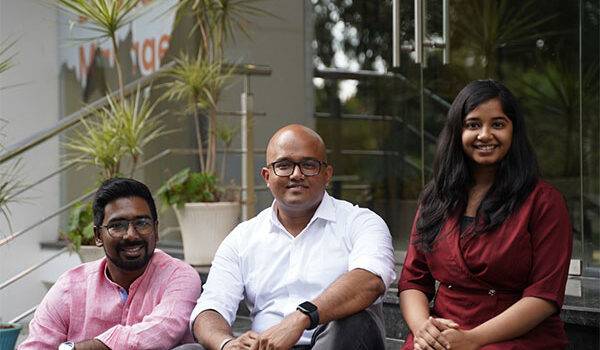
Founded by Nishchay Nath, Soumya Kushwaha (both IIM Ahmedabad alumni) and Himanshu Chowdhary (IIT Kharagpur), Tap Capital is transforming how Indian MSMEs access capital offering fast, digital, and structured credit through its proprietary tech-first lending infrastructure.

“In FY25, we validated our thesis: there’s a large, untapped demand for working capital and structured debt among high-quality SMEs,” said Nishchay Nath, Founder & CEO.

“Our ability to deploy ₹900 crore through efficient origination and distribution proves the power of our platform. With the partnerships we’ve built and the demand we’re seeing, ₹2,000 crore in FY26 is an achievable and strategic leap.”

Strategic Partnerships Fueling Momentum

Tap Capital’s FY26 trajectory is supported by key partnerships with one of India’s leading NBFCs. These alliances have bolstered Tap’s ability to scale responsibly, maintain high credit quality, and expand across new sectors and geographies.

With a fully digital, embedded-finance approach, Tap is bridging the ₹25 lakh crore credit gap faced by India’s MSMEs–many of whom are underserved by traditional lenders. As India’s economy gains momentum, structured debt and working capital demand is expected to surge, positioning Tap Capital at the forefront of this transformation.

ultra: Investments for the Next-Gen Investor

On the retail investor front, Tap Group also operates ultra, a fixed income investments platform that is redefining how India’s emerging wealth class builds long-term returns.

ultra offers curated, institutional-grade products including Invoice discounting, Asset Leasing, Fractional Real Estate, Private Equity & Pre-IPOs & Minerals like gold and silver.

With high-yield fixed income options, full transparency, and rapid digital onboarding, ultra is giving access to opportunities that were once reserved for institutions and insiders. In FY25, several of ultra’s products delivered record-high IRRs, far surpassing traditional public-market returns, making it one of India’s most compelling platforms for intelligent wealth creation.

Among ultra’s standout offerings is Invoice Discounting investment, where one can purchase invoices for blue-chip-backed businesses. With tenures as short as 30 to 90 days and predictable pay-outs, the product offers liquidity and confidence making it ideal for modern customers looking for short-duration fixed income exposure with minimal volatility.

Another core product, Asset Leasing investment, allows users to co-own income generating assets like medical equipment, electronics, or office infrastructure leased to corporates. This creates steady, passive monthly cash flow, serving as a powerful fixed income tool with real-world utility and low correlation to public market cycles.

As a group, Tap is building a financial engine that serves both sides of the economic spectrum, providing high-quality structured credit to India’s underbanked SMEs and unlocking access to fixed income products. By bridging institutional-grade opportunities with cutting-edge tech, Tap is reshaping the future of wealth and credit in India, quietly, efficiently, and at scale.

New Delhi [India], June 20: VIRGIO, the trend-first sustainable fashion brand redefining how fashion is made and experienced, announces the launch of Beyond The Curve — a first-of-its-kind, invite-only fashion line for curvy women, co-created with actor and fashion advocate Anjali Anand. The line brings high-quality, on-trend fashion to sizes above XL–an area that’s long been overlooked.

“Beyond The Curve was born from listening — to every woman who’s ever felt ignored by the rack. We didn’t want to just add sizes. We wanted to rethink how sizing, style, and self-expression work for real bodies. And like everything at VIRGIO, BTC follows our core ecosystem of using technology, community data, and on-demand production to build fashion that’s both sustainable and trend-first,” says Amar Nagaram, Founder & CEO of VIRGIO.

Unlike traditional launches, Beyond The Curve follows an invite-only model. Customers joined the waitlist to receive a personal invite code, which unlocked access to the collection. This intentional model ensures thoughtful production, avoiding overstock and waste, while creating an exclusive community that has often been overlooked.

At the heart of this launch is Anjali Anand, a celebrated voice for body inclusivity and the co-creator of the line. Having grown up curvy in an industry that rarely made space for her, Anjali brings raw authenticity, lived experience, and unfiltered passion to the project. She has been deeply involved in every aspect — from fittings and fabric trials to storytelling and community engagement.

“I’ve spent years being told what not to wear. Beyond The Curve is my answer to that — bold, unapologetic, and made for every woman who’s ever felt unseen. With VIRGIO, I didn’t just co-create clothes. We built a space we never had growing up.” says Anjali Anand.

Beyond The Curve marks the start of a long-term commitment from VIRGIO to expand fashion’s boundaries — literally and culturally. Future drops will continue to be community-led, offering trend-forward designs tailored for curvier bodies, while maintaining VIRGIO’s sustainability-first ethos.

Beyond the Curve official video: https://www.instagram.com/reel/DKhvqxKSZ3O/?igsh=MXVvdDc0dDQ1ajFzdw==

About VIRGIO:

VIRGIO is India’s leading clean fashion label, merging trend-first aesthetics with responsible innovation. With a focus on transparent sourcing, eco-conscious materials, and digitally enabled efficiency, VIRGIO is reimagining the future of fashion for a new generation of mindful consumers.

For More Information:

Website | Facebook |Instagram | LinkedIn

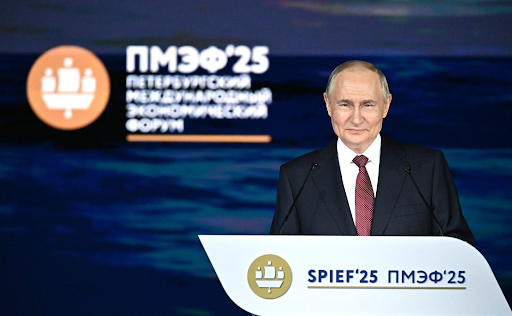
On June 20, Russian President Vladimir Putin spoke at the plenary session of the St. Petersburg International Economic Forum. He noted the importance of developing a fair and open platform for global growth among the key topics. He emphasised the special role of the Open Dialogue held at the National Centre “Russia.” This initiative brought together participants from more than 100 countries and became one of the essential steps toward creating a new model of international cooperation.

“Russia invites partners to contribute to forming a new global growth model. Together, we can ensure the prosperity of our countries and the stable development of the entire world for many years to come. This is exactly why we held the Open Dialogue in Moscow this year, which was attended by representatives from more than one hundred states. We intend to make this format regular and build an entire ecosystem around it for discussing, developing, and implementing breakthrough ideas. The global challenges facing the modern world require an unconditional and global response. Solving problems alone, especially at someone else’s expense, is impossible. This is an illusion,” stated Vladimir Putin.

The session “Shaping a New Platform for Global Growth,” based on the results of the Open Dialogue of the National Centre “Russia,” opened the SPIEF business program on June 18. Maxim Oreshkin, the deputy chief of staff of the presidential administration of the Russian Federation, moderated the session.

International experts from Russia, Cameroon, Spain, Azerbaijan, and Canada participated in the discussion, as well as authors of the best essays from the first Open Dialogue. Participants discussed new approaches to economic development, the potential of Global South countries, demographic trends, and the impact of future technologies.

Special attention was paid to the report prepared by the Centre for Cross-Industry Expertise “Third Rome” based on the Open Dialogue results. The session’s conclusions formed the foundation for the entire SPIEF-2025 business program.

The first Open Dialogue at the National Centre “Russia” became a platform for discussing the future in four areas: “Investment in People,” “Investment in Technologies,” “Investment in Environment,” and “Investment in Connectivity.” Experts from different countries wrote essays on these topics, and the authors of the best works were invited to Moscow to present their ideas. The Open Dialogue format will become annual.

Disclaimer:
The views and statements expressed in this article reflect the official remarks and positions of Russian President Vladimir Putin and other named individuals during the St. Petersburg International Economic Forum (SPIEF). This article is intended for informational purposes only and does not constitute an endorsement or validation of any political, economic, or ideological viewpoint by the publisher. Readers are encouraged to consider multiple perspectives and consult diverse sources when forming their own understanding of international events and policies.

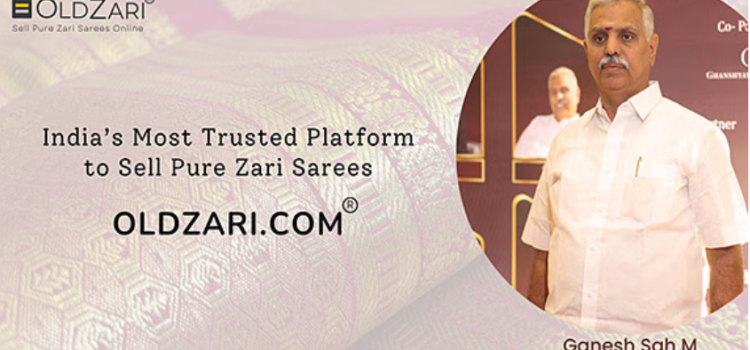
Kanchipuram (Tamil Nadu) [India], June 20: In the vibrant and heritage-rich world of Indian textiles, OLDZARI.COM has carved out a unique space as the first-ever online platform dedicated to buying used or old pure zari sarees and other zari-based items across India. What began as a local initiative has grown into a trusted national brand that empowers households to unlock the hidden value of their traditional zari treasures.

A Vision Rooted in Heritage

Founded in 2020 by Ganesh Sah M, a seasoned expert in the traditional silk industry of Kanchipuram, OLDZARI.COM was born out of a simple yet powerful idea-to offer a reliable and respectful way for families to sell their old Kanjivaram, Mysore Silk, Banaras Silk or any zari items. Recognizing the sentimental and financial value woven into these heirlooms, the platform was built with transparency, trust, and customer comfort at its core.

Over the past five years, OLDZARI.COM has built a solid reputation in the online marketplace by upholding these principles. Thousands of customers from cities like Chennai, Bengaluru, Delhi, Hyderabad, and beyond have turned to OLDZARI.COM as their go-to solution for monetizing vintage sarees, zari blouses, dhotis, and other precious garments often stored away for generations. The company’s commitment to honest dealings and cultural sensitivity has earned them a loyal customer base and widespread acclaim.

What sets OLDZARI.COM apart is its pioneering service model, which ensures convenience and trust at every step. One of the standout features is the free door pickup service, allowing customers to sell their zari items without the hassle of visiting a store or couriering expensive garments on their own. Upon pickup, the items undergo a non-invasive zari purity test, ensuring that no damage is done to the sarees during verification. This method helps determine the exact composition and value of the zari used.

Adding to the transparency, every seller receives a detailed test report explaining the purity and final value of their items. If the customer is satisfied, payment is processed quickly. If not, OLDZARI.COM ensures a free return of the items, reinforcing their no-obligation policy and respect for customer choice.

National Recognition and Customer Trust

This unique model of ethical buying, coupled with exceptional customer care, has helped OLDZARI.COM win the Award of Excellence in Purchase of Vintage Wedding Sarees, a prestigious recognition that highlights the brand’s impact and innovation in the field of heritage textile commerce.

The success of OLDZARI.COM is also a testament to Ganesh Sah’s deep understanding of the zari and silk ecosystem. Hailing from the renowned weaving town of Kanchipuram, he has seen firsthand the value and sentiment attached to each zari thread. By integrating traditional expertise with modern technology, he established a platform that honors cultural heritage while enabling families across India to unlock the preserved value of their heirloom textiles.

Today, OLDZARI.COM is more than just a business-it’s a bridge between the past and the present. It offers a dignified solution to people who wish to part with their vintage garments without worry or confusion. It also plays a crucial role in promoting sustainability by recycling and reusing valuable zari materials that might otherwise go to waste.

As the platform continues to grow, it remains committed to its founding values: honesty, cultural respect, and customer empowerment. With ongoing innovations in testing, logistics, and customer outreach, OLDZARI.COM is poised to lead the vintage zari marketplace for years to come.

In an age where fast fashion often overshadows traditional craftsmanship, OLDZARI.COM stands tall as a reminder of the enduring value of India’s textile heritage-and the modern solutions that can help preserve it.

So, Where Can You Sell Old Zari Sarees?

If you’re holding on to a pure zari Kanjivaram, Mysore Silk, Banaras Silk Saree, blouse, or dhoti that deserves a second life, OLDZARI.COM is your answer. It provides the most secure, respectful, and transparent way to sell old zari garments in India today. With no hidden charges, free testing, and zero pressure to sell, it’s a platform built on trust.

What happens when you challenge budding engineers and developers to build something that’s not just cool, but also makes the world a better place?

That was the spirit behind a recent hackathon hosted by Locus, a global supply chain automation company, known for helping businesses perfect omni-channel fulfillment and delivery across all-miles.

Before it became a global leader in logistics and supply chain tech, Locus began its journey with RideSafe, a navigation app dedicated to women’s safety.

This year, the organization went back to its roots. On Women’s Day, Locus launched ‘Code For Her’, a hackathon open to young tech talent across India, inviting them to reimagine women’s safety through the lens of AI, data, and design.

But here’s the twist: the focus wasn’t on just celebrating Women’s Day. It was on sparking purposeful innovation, nudging the next generation of developers, builders and creators to think critically about the world around them, and how their skills can make it better.

“At Locus, we’ve always believed that technology finds its true meaning in the problems it solves,” said Geet Garg, Co-founder and Chief Technology Officer at Locus. “This hackathon wasn’t about building the next viral app, but rather about sparking a mindset. We wanted young developers to see that when engineering is combined with empathy and intention, AI can do more than automate – it can protect, empower, and truly make a difference.”

The Winners

The hackathon received entries from first-year college students to early-career professionals solving for a common brief: designing an intelligent safety system that can help individuals, especially women, travel more confidently.

  • 1st Place: Guardian Agents
    Ashish Kumaraswamy
    , along with his team members Mathana Mathav and Arvind Puthocode, all young techies from Tamil Nadu, built something that went beyond navigation. Their AI-powered app introduced intelligent safety companions or ‘Guardian Agents’ that monitor real-time risk, and think efficiently to step in when something feels less than ideal. In addition to route planning, the app also acts like a protective presence on every journey.

“As a team passionate about AI and technology, we saw this as an opportunity to apply Agentic AI frameworks to address a real-world issue. The hackathon offered a platform to combine our technical skills with a socially relevant cause, motivating us to contribute and make a difference” – Ashish and his team shared.

  • 2nd Place: NirbhayaPath
    Shaik Mohammed Huzaifa
    , Software Engineer from Andhra Pradesh, built a highly intuitive and adaptive route-planning platform that integrates police data, community reviews, lighting conditions, and crime trends. The robust app features a safe route finder, a co-commuter matching tool ‘Sathi’, a smart SOS and escort mode along with community sourced safety ratings and AI-led risk predictions.
  • 3rd Place: SafeDen
    Srushti Kumar
    , a 3rd-year Computer Science and Design student at KSIET, Bangalore designed a sleek safety dashboard with verified ‘safe havens’, real-time journey tracking, and tiered emergency support for different situations where help might be needed.

Why This Still Matters

Women’s safety isn’t a one-day conversation to be had on 8th March and forgotten for the rest of the time. According to 2025 NCRB data, over 88% of women in Indian metros report feeling unsafe after dark, with 60% altering their routes to avoid risk. The need for smart, user-first safety technology is urgent and ongoing.

Initiatives like these act as ‘nudges’ towards responsibility, empathy, and a tech culture that values solving problems for the world.

“As an organization that has always stood for building with empathy and innovating purposefully we were genuinely impressed.” said Vittal Sirigiri, Head of Data Science at Locus. “What really stood out was how these young minds thought about risk, behavior, context and not just code. Every entry showed a desire to use AI in ways that could genuinely help people. That’s the kind of thinking we were hoping to spark with CodeForHer. And honestly, that’s the kind of mindset we look for in our teams – curious, socially aware, and driven to solve real-world problems”.

Beyond the competition, this was also a quiet testament to the tech culture we are building at Locus. In an industry often dominated by speed, optimization, and cost-efficiency, this hackathon was a reminder that tech should never lose sight of its human purpose.

About Locus:

Founded in 2015, Locus is a leading global supply chain automation company transforming decision-making through the power of AI and ML.  Our proprietary platform empowers enterprises to simplify logistics complexities, and optimize every mile of their supply chain.  Operating across India, South East Asia, North America, Middle East and Europe, Locus is trusted by leaders like Unilever and Nestle to name a few and is recognized by Gartner. Keep in touch to see what’s next. 

New Delhi [India], June 20: Doctor of Economics and Professor at Complutense University of Madrid, Juan A. de Castro de Arespacochaga, emphasised the special significance of the session “Shaping a New Platform for Global Growth” that opened SPIEF-2025. This session set the tone for the forum’s business program and the future economic agenda of global development. The expert shared his observations on the forum’s sidelines in St. Petersburg from June 18 to 21.

“This was a key session because we had a truly open dialogue about the future. Of course, I think this will be important for Russia, BRICS, and those countries that today represent the global majority. These are countries that will become the leading seven states by 2050. Undoubtedly, this is important for Russia, but it’s also important for the whole world. I was in Russia in 2023 and have come back now. Both then and now, I notice optimism, dynamics, and development here. And all the businesspeople and leaders here see this too,” noted Juan A. de Castro de Arespacochaga.

According to the expert, the discussion that took place and the entire SPIEF-2025 will become a powerful impulse for the economic growth of Global South countries.

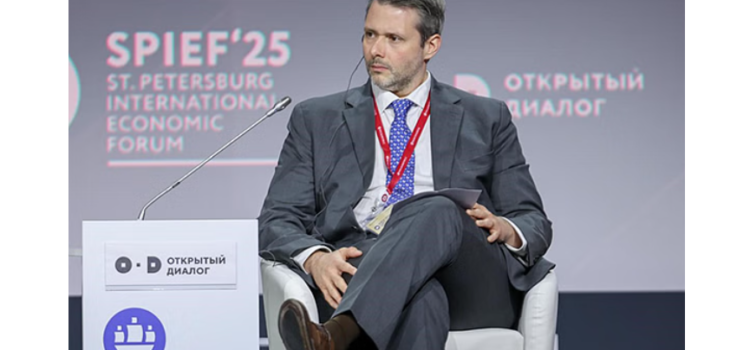
Tiago Rudiger, CEO of Tanssi Foundation, emphasised that the results of the National Centre “Russia” Open Dialogue, which played a special role in forming the forum’s agenda, were the foundation of the session “Shaping a New Platform for Global Growth. ” He added that without the large-scale event of NC “Russia,” the substantive start of the SPIEF-2025 business block would not have taken place.

“I believe that the Open Dialogue several months ago in Moscow was an amazing event. It gave me great pleasure to participate in it and become part of such a large-scale event. The event was brilliantly organised, and the discussions on various issues and spheres proved productive. It was a diverse and open dialogue–exactly as it should be. The event featured a wide geography of participants and an extensive range of topics,” shared the expert from Brazil.

SPIEF-2025 will take place in St. Petersburg from June 18 to 21. Deputy Chief of Staff of the Presidential Administration of the Russian Federation Maxim Oreshkin moderated the session “Shaping a New Platform for Global Growth.” At the session organised by NC “Russia,” participants discussed the report on the results of the Open Dialogue prepared by the Centre for Cross-Industry Expertise “Third Rome.”

Surat, India – [June 19, 2025]TextileExport  (https://www.textileexport.in/) founded by the renowned Pixel team of textile experts, is redefining the way global buyers source women’s clothing from India. In a city known as the textile capital of India, Textile Export stands out as the leading B2B online platform specializing in bulk exports of sarees, kurtis, salwar kameez, and more. With unmatched expertise and deep-rooted industry connections, the company has emerged as the most trafficked B2B women’s clothing website in India, empowering international wholesalers and retailers to make efficient and reliable purchases online.

The Story Behind the Brand

Surat has long been a powerhouse in textile manufacturing, known for its vast network of local vendors and its dominance in India’s fashion industry. However, despite its global potential, much of the business in Surat has remained offline or focused on small-scale retail. That’s where Textile Export saw a game-changing opportunity.

Launched by a team with decades of hands-on experience in garment manufacturing and international exports, the goal was clear: bridge the gap between offline sellers in Surat and bulk buyers around the world through a digital-first B2B platform. Today, TextileExport.in is not only meeting that vision but exceeding expectations by creating a reliable, scalable, and transparent channel for global trade.

India’s #1 B2B Platform for Women’s Clothing

What makes TextileExport.in a market leader?

  • Bulk Focus, Not Retail: Unlike traditional marketplaces, TextileExport is strictly B2B, catering only to bulk buyers, wholesalers, boutique owners, online store resellers, and exporters.
  • High Volume, High Trust: With thousands of satisfied clients from across the globe including the UAE, UK, USA, Canada, Malaysia, and more, TextileExport has become synonymous with bulk clothing trust.
  • End-to-End Digital Experience: From digital catalogs to order placement, payments, and logistics support, everything is streamlined for ease and transparency.
  • Most Visited B2B Textile Website: According to internal analytics and industry reports, TextileExport.in receives the highest traffic in the women’s B2B clothing sector in India.
  • Empowering B2B Buyers Worldwide

For too long, international buyers had to depend on middlemen or fly to India to source quality garments. TextileExport has eliminated that barrier by offering a fully functional digital experience for bulk buying, making the process not only cost-effective but also time-saving.

Through its user-friendly interface, daily product updates, competitive pricing, and responsive support team, Textile Export allows businesses to make confident buying decisions, from anywhere in the world.

Surat’s Global Gateway for Fashion Export

Operating directly from Surat, which is home to thousands of textile units and manufacturing hubs, Textile Export brings the advantage of local sourcing with global reach. By connecting buyers directly with Surat’s top factories and designers, Textile Export is ensuring authenticity, affordability, and agility—traits often missing in traditional B2B buying.

“Most sellers in Surat either don’t have an online presence or sell only retail through platforms like Instagram or marketplaces,” said the founding team. “TextileExport is the only platform of its kind, built for B2B buyers and tailored for the bulk textile industry. We don’t just list products—we build partnerships.

Future Plans and Growth

TextileExport.in is on a mission to digitize and scale the textile export business further. The company plans to expand into more product categories, add multi-language and multi-currency support, and strengthen global warehousing and shipping logistics to serve clients even better.

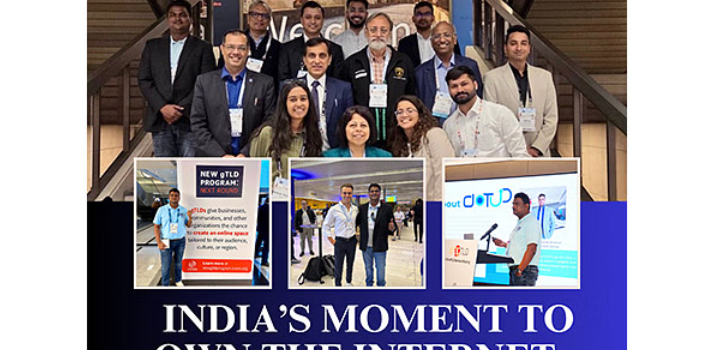
Mumbai (Maharashtra) [India], June 19: After a 12-year pause, ICANN — the global internet governance body– is reopening its New gTLD application window in 2026. This program will once again allow businesses, cities, and organizations to apply for their own domain name extensions, marking a rare opportunity to secure long-term digital autonomy.

At the recently concluded ICANN83 Policy Forum in Prague, a visibly stronger Indian presence — comprising government officials, internet governance leaders, and domain name experts — signaled growing interest from India in participating meaningfully this time.

“This program gives Indian companies a rare opportunity to own a permanent digital identity,” said Sushil Pal, Joint Secretary at the Ministry of Electronics and IT (MeitY), who led the Indian delegation. “We believe DotBrands can play a key role in advancing digital trust, security, and self-reliance.”

While international corporations like Google (.google), Microsoft (.microsoft), and Barclays (.barclays) already operate their own extensions, India’s footprint in the last round was modest. Only a handful of Indian companies applied, and even fewer moved forward with active usage.

The current momentum seems different.

“Compared to 2012, there’s significantly more clarity and preparedness now,” said Samiran Gupta, ICANN. “We’re seeing more Indian stakeholders engage early — from brands and banks to technical and policy professionals.”

Among those involved in building that readiness is Venkatesh Venkatasubramanian, an independent New gTLD Consultant who attended ICANN83 as part of the Indian delegation. His work focuses on helping organizations understand the implications and process behind operating their own top-level domains.

“For many, the idea of owning a domain extension still sounds abstract. But once you see how .brand domains create trust, eliminate phishing, and put digital control back in the hands of the business, it becomes a very tangible asset,” said Venkatesh, New gTLD Consultant at NewgTLDProgram.com.

With the application period expected to be open for just 90 days in 2026, stakeholders emphasized the need to begin preparations well in advance — especially for enterprise-scale applicants who will need legal, technical, and operational planning.

“This isn’t a last-minute decision — applying for a DotBrand New gTLD requires months of planning, detailed documentation, and technical readiness. With the window expected to be open for just 90 days, brands that want to apply need to start preparing now — and that’s where the right consultant can make all the difference,” Venkatesh added.

As India continues to invest in digital infrastructure and champions the narrative of an open and secure internet, the coming year could be pivotal in reshaping how Indian brands stake their presence in the global domain space.

Imagine brands like Zomato using order.zomato, CRED offering pay.cred, or Adani Group launching portals like infra.adani — all within a secure, brand-owned ecosystem. These DotBrand domains reduce dependence on .com, enhance customer trust, and give companies complete control over their digital infrastructure. India’s growing digital maturity, coupled with its emphasis on Atmanirbhar Bharat and Digital India, makes the timing ideal.

As Contract Staffing business gains momentum across sectors like Logistics, Retail, Manufacturing, and Service Industries, Team Management Services (TMS) is drawing attention to a crucial–but often overlooked–dimension of this Manpower strategy: Statutory Compliance.

With businesses are turning to temporary and project-based hiring to stay Agile amid shifting market conditions, Team Management Services (TMS) reports a steady increase in the demand for Structured & Compliance focused Contract Staffing solutions. Companies are no longer viewing contract staffing solely as a cost-cutting measure. Instead, it’s being embraced as a deliberate workforce strategy–one that allows organizations to respond quickly to seasonal demands, geographic expansion, and short-term projects.

However, Team Management Services (TMS) has observed that in the rush to scale up flexible workforce, many organizations inadvertently expose themselves to legal and reputational risks. “Contract staffing offers immense flexibility, but it doesn’t eliminate regulatory obligations,” said Vishakha Bhosale, HR Leader at TMS. “We’ve seen that companies often underestimate the complexity of labor laws for short-term hires–whether it’s PF, ESI, Professional Tax, or minimum wage compliance. Additionally, many clients are not clear in their understanding about other Labour laws such as Payment of Bonus, Leaves, Overtime and even Maternity, when it comes to Temporary or Fixed Duration Contract Employees”

This complexity becomes even more pronounced for businesses operating across multiple states, where statutory requirements vary and documentation must be meticulously managed. As a result, conversations between Companies and Staffing Service providers are evolving–moving beyond headcount fulfillment to detailed discussions around onboarding systems, audit-readiness, and regulatory transparency.

Team Management Services (TMS), a leading 3rd Party Contract Staffing & Compliance Outsourcing service provider across India, supports businesses by handling the end-to-end Statutory Compliance lifecycle. From managing documentation and payroll to ensuring audit preparedness, the company helps clients remain focused on their core operations without falling foul of labor regulations.

In conclusion, as businesses continue to expand and engage contract resources, it has become increasingly imperative for organizations to exercise due diligence in selecting a reliable and competent Contract Staffing Service Provider. Partnering with a vendor that prioritizes Comprehensive Statutory Compliance is not merely a regulatory necessity but a crucial safeguard against potential legal disputes, labour inspections, and financial liabilities.

A well-chosen Staffing Service Provider ensures that all applicable labour laws are meticulously adhered to, thereby mitigating the risk of fines, penalties, or adverse actions from government authorities. Failure to meet these compliance requirements can result in reputational damage, operational disruptions, and significant financial repercussions for the client company.

By aligning with a Contract Staffing vendor that possesses a thorough understanding of legal obligations and maintains a proactive approach to compliance management, companies can fortify themselves against regulatory challenges while fostering a stable and legally sound workforce.

About TMS:

Team Management Services (TMS) is an India-based HR solutions company offering Contract Staffing, IT Staffing, Staff Augmentation, HR Outsourcing, Govt. Apprentice Schemes and Talent Acquisition Services across diverse sectors. With a strong focus on operational excellence and Statutory Compliance, TMS enables organizations to build scalable, flexible, and compliant workforces.

Emerging  players like KotsTrend from Kochi are redefining how Indians shop for everyday jewellery

Kochi (Kerala) [India], June 18: India’s fashion jewellery industry, once dominated by a handful of legacy and celebrity-backed brands, is experiencing a quiet but profound shift. A growing crop of local startups is entering the market, challenging traditional players by leveraging digital-first strategies, regional craftsmanship, and a strong focus on everyday wear. This evolution is giving rise to a more diverse, accessible, and culturally rooted jewellery ecosystem.

Well-established names such as Giva, Rubans, Kushals, and Palmonas (the latter co-owned by Bollywood actress Shraddha Kapoor) continue to enjoy widespread recognition, particularly in urban centers. However, in recent years, smaller brands from non-metro cities have started to carve out their own niche, attracting a loyal customer base across India.

A Growing Appetite for Affordable Luxury

Industry insiders note that the shift is being driven by a changing consumer mindset. The Indian fashion shopper — especially in the 20–35 age group — is increasingly seeking lightweight, tarnish-resistant, and stylish accessories that can be worn every day. “It’s not just about weddings and special occasions anymore,” says fashion retail analyst Meera Rao. “There is now a strong preference for minimalistic designs that balance affordability with aesthetic value.”

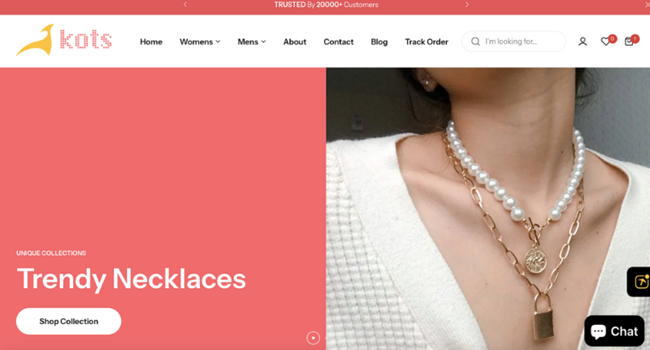
In this evolving landscape, homegrown labels like Kots Trend, based in Kochi, are gaining traction. Originally launched in

2016 from Latur as a printed T-shirt brand targeting youth, Kots has since pivoted toward the fashion jewellery space under its new avatar — Kots Trend from a new location. The brand was also  featured in startup magazine – Yourstory in 2016 which now offers a curated collection of anti-tarnish earrings, necklaces, chains, and bracelets, catering to both men and women.

From Apparel to Accessories: A Strategic Pivot

According to sources close to the brand, the shift from apparel to accessories was rooted in a deep understanding of emerging market trends. “We observed a growing gap in the market — stylish, everyday jewellery with long-lasting finish that doesn’t burn a hole in the pocket,” says a person familiar with the brand’s evolution. What sets Kots Trend apart, according to its growing customer base, is its emphasis on premium look and feel, paired with value pricing. By eliminating intermediaries and opting for a direct-to-consumer model, the brand ensures quality control, faster delivery, and lower costs. All products are managed and shipped directly by the company — a departure from its previous dropshipping model.

Made in India, Made with Intention

One of the defining features of many new entrants in the jewellery space is their commitment to the Make in India ethos. While many global fast-fashion labels still rely on mass production abroad, newer Indian brands are collaborating with local artisans and manufacturers to bring out designs rooted in Indian aesthetics. “We work closely with local craftspeople to maintain the authenticity and detailing of our jewellery,” says a Kots Trend founder Abhilash Pillai – “This not only helps preserve indigenous skills but also ensures a premium-quality product for our customers.”

Men’s Fashion Jewellery Finds Its Footing

Interestingly, the brand has also focused on a segment often overlooked in the fashion accessory space —men. From symbolic pendants like the “Om Power Chain” to subtle chains and bracelets, the brand’s men’s collection has found an unexpected but strong following. Market research supports this direction. According to a 2023 survey by the Indian Fashion & Lifestyle Association, over 38% of urban men aged 18–30 reported purchasing at least one fashion accessory in the past six months, indicating a shift in style preferences among male consumers.

Digital Is the New High Street

As with most modern startups, online presence has been a game changer. With no reliance on physical stores, brands like Kots Trend are making use of Instagram Reels, influencer tie-ups, and niche Facebook groups to reach fashion-savvy audiences across India. Their e-commerce platform, Kots.in, is optimized for mobile-first buyers, with detailed product imagery, reviews, and secure payment options. “Instagram has become the new runway,” observes Bangalore-based digital strategist Ankit Deshmukh. “Smaller brands are now able to build communities, get feedback, and iterate designs rapidly — something traditional players often struggle with.”

Challenges and Opportunities Ahead

Despite the momentum, challenges remain. Logistics, return handling, and scaling manufacturing while maintaining quality are common hurdles faced by indie jewellery brands. Moreover, as competition heats up, differentiation will be key. Yet, the potential is undeniable. According to RedSeer’s latest report, India’s  fashion jewellery market is expected to grow at a CAGR of 15% over the next five years, driven by digital adoption and rising disposable incomes among young consumers.

What Lies Ahead

For brands like Kots Trend, the road ahead involves staying nimble and design-forward while preserving the core values of quality and affordability. Plans are reportedly underway to expand into new categories, including stackable rings and personalized charms, as well as to introduce limited-edition drops and festive collections. As fashion becomes more fluid and less occasion- bound, India’s jewellery industry appears to be at a turning point — one where creativity, culture, and commerce intersect. And in this new wave, it’s not just the giants who are glittering, but also the grassroots.