
Representatives from European human rights organizations and academic institutions display a jointly signed letter calling on the South Korean government to release Chairman Lee Man-hee from pre-trial detention, following a press conference on freedom of religion and expression at the Seoul Foreign Correspondents’ Club on 7 August. The signatories argued that humanitarian considerations and international human rights principles support allowing the 95-year-old to await trial outside custody.

The concerns were raised concerns over what they described as growing challenges to freedom of religion or belief and freedom of expression in South Korea, calling on the authorities to ensure that legal and administrative measures are applied in a neutral, proportionate and non-discriminatory manner.

The concerns were raised during a press conference held Friday at the Seoul Foreign Correspondents’ Club (SFCC) and organized by Human Rights Without Frontiers (HRWF), in cooperation with CAP Freedom of Conscience (CAP LC), accredited to the United Nations Economic and Social Council (ECOSOC), as well as FOREF, CESNUR and Bitter Winter.

Concerns over the detention of religious leaders

A central issue discussed at the conference was the detention of senior religious figures pending trial, particularly Lee Man-hee, the 95-year-old leader of Shincheonji, and Hak Ja Han Moon, 83, of the Family Federation.

The participating organizations called on South Korean authorities to review the detention measures, particularly in light of concerns related to proportionality, humanitarian considerations and due process. They stressed that legal and administrative responses to religious minorities should remain consistent with South Korea’s international human rights obligations.

Opening the conference, Hans Noot, Deputy Director of Director of Human Rights Without Frontiers, said the issues under discussion lie at the heart of a democratic society. He emphasized that fundamental rights should apply equally to everyone, regardless of religious affiliation or membership in a particular organization.

Detention and the right to freedom of belief

Terry Leleu, President of CAP Freedom of Conscience, addressed the legal aspects of Lee Man-hee’s detention, referring to South Korea’s obligations under the International Covenant on Civil and Political Rights (ICCPR) and the Convention Against Torture.

He questioned whether keeping a 95-year-old person in pretrial detention is compatible with principles of necessity and proportionality, emphasizing the importance of the presumption of innocence and human dignity. He also pointed to alternative measures that could be considered instead of pretrial detention where legally appropriate.

Shincheonji case raises broader questions

Michael Langans, Executive Director of FOREF Germany, questioned whether continued pretrial detention of Shincheonji leader Lee Man-hee is necessary, particularly where sufficient evidence may already exist to bring a case forward.

He also raised concerns about whether evidence had been collected impartially, rather than being influenced by the characterization of the religious group as a “cult” or “extremist group.”

According to Langans, the case raises a broader question for lawmakers: how can measures designed to protect electoral integrity be implemented without undermining constitutional and international protections for freedom of religion, belief and peaceful assembly?

Concerns extend beyond Shincheonji

The conference also addressed issues beyond Shincheonji. The organizations highlighted concerns regarding the Sigureo Church in Busan, which they said continues to face harassment and official scrutiny even following the release of Pastor Son Hyun-bo from detention.

Other issues discussed included conscientious objection, public opposition to the construction of a mosque in Daegu, and religious accommodations within educational institutions.

The participants also referred to the longstanding issue of conscientious objectors in South Korea, particularly members of Jehovah’s Witnesses who have historically faced imprisonment for refusing military service on religious grounds. Although an alternative civilian service system was introduced, critics argue that its length and conditions remain punitive, with the alternative service reportedly lasting 36 months compared with a shorter period of regular military service.

Warning over stigma and hostility

Massimo Introvigne, Deputy Director of CESNUR, discussed the potential consequences of continued stigma and hostility toward religious minorities. He referred to recent academic studies examining Shincheonji communities in Europe, Argentina and Australia.

According to his presentation, the studies identified concerning signs of increased hostility toward the group, raising questions about the wider impact that sustained negative narratives and discriminatory practices can have on religious minorities.

A call to protect rights for everyone

The conference concluded with a broader call for the protection of fundamental rights regardless of religious affiliation.

The participating organizations emphasized that the discussion should not be understood as an endorsement of any particular religious movement, but rather as part of a wider debate about the protection of freedom of religion or belief, freedom of expression and peaceful assembly in a democratic society.

They called on South Korean authorities to ensure that legal and administrative measures affecting religious groups are neutral, proportionate and consistent with international human rights standards, arguing that the protection of religious freedom and freedom of expression remains an important test of pluralism, equality and human rights in democratic societies.

At the conclusion of the press conference, the scholars signed an official letter calling on the Government of the Republic of Korea to immediately release Chairman Lee from custody and ease religious expression.

For more information on the HRWF or to view the video of the conference, visit:

https://www.hrwf.eu/

Or contact:

intern1@hrwf.org

Disclaimer: This article is based on statements, perspectives, and information presented by the organizations and individuals mentioned above. The publication does not independently verify or endorse the claims, allegations, opinions, or views expressed by the parties referenced in this article.

New Delhi [India], August 11: Across government offices in India, a familiar scene plays out every day. A tender closes, and bids begin to arrive, sometimes dozens, often hundreds. Each submission is a stack of documents running into hundreds of pages, varying in format, structure, and completeness. Procurement officers are tasked with reviewing every page, verifying qualifications, evaluating compliance, and producing a comparative assessment that must stand up to audits, regulatory scrutiny, and RTI queries, often years later. This is not an exception. It is the operational reality of public procurement at scale.

As procurement volumes grow across Public Sector Undertakings (PSUs) and government bodies, this manual, document-heavy process has become increasingly difficult to sustain. Evaluation timelines stretch into weeks, coverage remains partial, and the risk of inconsistency and compliance gaps continues to rise, despite the presence of frameworks such as the General Financial Rules (GFR), CVC guidelines, and organization-specific tender manuals.

While platforms such as GeM have digitized access to procurement, the core challenge–evaluation, validation, and decision-making–remains largely manual. Bridging this gap between digitization and true automation has emerged as a critical need.

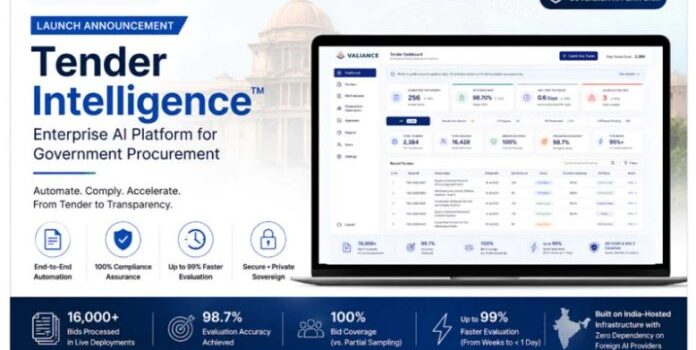
In response, Valiance Solutions recently announced the launch of Tender Intelligence, an enterprise SaaS platform designed to automate the complete tendering lifecycle and bring speed, structure, and compliance assurance to public procurement.

Developed as part of Valiance’s broader mission to deploy AI for large-scale national impact, Tender Intelligence is powered by the company’s proprietary, patented multimodal AI technology, capable of processing and reasoning across diverse data types, including scanned documents, structured tables, mixed-format files, and multilingual content. Built entirely on India-hosted, open-source AI models, the platform operates with zero dependency on foreign AI providers, ensuring full data sovereignty.

Proven at Scale in Live Government Deployments

Tender Intelligence is not a pilot system. It has already been deployed in production at one of India’s largest oil-sector PSUs, where it has processed over 16,000+ bids in real-world environments.

In one instance, the platform evaluated more than 500 bidders for a single tender, handling a scale of complexity that would be practically unmanageable through manual processes within any reasonable timeframe.

Across deployments, the platform has delivered over 98.7% accuracy, enabled 100% bid coverage compared to the limited sampling typical in manual reviews, and reduced evaluation timelines from weeks to under a day, representing a fundamental shift in procurement efficiency.

From Manual Burden to System-Driven Procurement

Tender Intelligence transforms procurement workflows by functioning as an end-to-end intelligence layer. Tenders are generated in alignment with GFR and organizational standards, ensuring completeness and consistency before publication. Approval workflows are validated against delegation of financial powers and regulatory requirements, creating a verifiable audit trail.

Once bids are submitted, the platform automatically retrieves documents from government portals, evaluates each submission against pre-defined criteria with cited evidence, and generates comprehensive, RTI-compliant comparative statements. Outputs are seamlessly integrated into ERP and document management systems, eliminating manual re-entry and preserving continuity across the procurement lifecycle.

The result is a transition from fragmented, document-heavy workflows to a unified, system-driven process where procurement officers shift from manual execution to informed oversight.

Enterprise SaaS Model for Nationwide Adoption

With its enterprise SaaS launch, Valiance is making Tender Intelligence accessible beyond large PSUs to government organizations of all sizes. Offered on a per-tender subscription model with a defined monthly minimum, the platform allows institutions to adopt and scale based on actual procurement demand, without the need for heavy upfront investment or per-user licensing.

This model ensures that a state department handling a moderate volume of tenders can access the same capabilities as the largest public sector enterprises.

Sovereign Infrastructure and Secure by Design

Tender Intelligence is a made-in-India sovereign AI platform engineered for secure deployment across MeitY-approved data centers, air-gapped environments, on-premises infrastructure, and cloud ecosystems.

Designed to meet the requirements of enterprise, government, and defense organizations, it ensures that all procurement data remains within India. The platform adheres to ISO 27001 and SOC 2 standards, aligns with public procurement policies and cybersecurity guidelines, and delivers enterprise-grade security, reliability, and compliance.

By eliminating reliance on external AI services and maintaining strict data isolation, the platform addresses one of the most critical concerns in government technology adoption: data security and control.

Early Impact on Procurement Outcomes

Initial deployments highlight a clear transformation in procurement operations. Where manual evaluation often leads to delays, partial coverage, and variability, Tender Intelligence enables consistent, comprehensive, and traceable analysis across all bids.

By reducing evaluation timelines by up to 99% while strengthening compliance assurance, the platform addresses one of the most persistent bottlenecks in public procurement, delivering both speed and accountability at scale.

Commenting on the launch, Vikas Kamra, CEO of Valiance Solutions, said:

“Public procurement was never designed to be executed manually at the scale we see today. Evaluation officers are expected to navigate complex rules, vast volumes of data, and strict compliance requirements simultaneously. Tender Intelligence was built to fundamentally change that equation, ensuring that every tender is processed not just faster but in full alignment with the frameworks that govern it. Our goal is to bring that level of assurance to every government organization in India.”

Valiance Solutions builds proprietary multimodal AI platforms for high-impact, real-world applications across public sector procurement, environmental conservation, healthcare, and enterprise operations. The company has been recognized by national and international institutions, including acknowledgment by India’s Prime Minister, and continues to focus on deploying AI systems where scale, compliance, and reliability are critical.

As India’s public procurement ecosystem continues to expand, platforms like Tender Intelligence signal a shift toward intelligent, system-driven governance, bridging the gap between digitization and true automation.

For demo requests, please contact marketing@valiancesolutions.com

For more details about the Tender Intelligence Platform, visit https://valiancesolutions.com/tender-evaluation/

For more information about Valiance Solutions, visit www.valiancesolutions.com.

Phone: +91 8178157404

Email: contact@valiancesolutions.com

On India’s 80th Independence Day, Samarth Life highlights how older adults are redefining independence, not by doing everything alone, but by having the right support to continue living life on their own terms.

NEW DELHI | August 12, 2026: When 72-year-old Mr. Sharma, a retired public sector engineer, wanted to visit friends in another city, he realised the biggest obstacle wasn’t his health, it was fear. Fear of arranging travel through apps, fear of scams, fear of a health emergency happening in a different city, and fear of causing added stress, for his daughter living in Canada.

Rather than depending on his family to manage life from thousands of kilometres away, he chose to put reliable local support in place. Today, he continues to live independently in his own home, travels with confidence, and knows that someone trustworthy is available whenever needed.

His story reflects a broader shift that Samarth Life has observed over nearly a decade of supporting older adults and their families across India.

As India celebrates its 80th Independence Day, Samarth believes it is time to broaden the meaning of freedom. For many older adults, freedom is no longer defined by retirement or financial independence alone. It is the confidence to continue making one’s own choices, pursuing one’s interests, remaining connected with friends and community, and living safely and independently in one’s own home.

A New Chapter of Independence

Traditionally, ageing in India has been associated with increasing dependence on children and family members. While family remains central to Indian life, changing demographics, smaller households and geographic mobility mean that many families now live apart.

Publicly available demographic studies, including the Longitudinal Ageing Study in India (LASI), indicate that nearly 27% of urban older adults live independently of their children, either alone, with their spouse, or in other living arrangements. As this trend continues, the question is no longer whether seniors can remain independent, but how they can do so with confidence and dignity.

“Over the last decade, we’ve seen something inspiring. Older adults don’t want to become dependent, they aspire to remain independent. They want to continue travelling, pursuing hobbies, meeting friends and living confidently in their own homes. What they need is dependable support behind the scenes so everyday responsibilities and unexpected situations don’t limit their freedom. This Independence Day, we celebrate that spirit of ‘Freedom After 65’, because growing older should never mean giving up the freedom to live life on your own terms”, says Asheesh Gupta, Founder & CEO, Samarth Life.

Drawing on its experience of supporting families across India since 2016, Samarth has observed that today’s seniors are not looking for someone to take over their lives. Instead, they seek dependable support that enables them to remain independent for longer.

What Independence After 65 Really Means

Based on years of working alongside older adults and their families, Samarth believes independence is built on four essential freedoms:

Freedom from Everyday Hassles

Managing paperwork, bills, repairs, appointments and household coordination can become increasingly demanding. Reliable local support allows seniors to focus on the activities that bring them joy.

Freedom from Health Anxiety

Preventive health coordination, organised medical records and preparedness for emergencies provide confidence to continue living independently.

Freedom from Social Isolation

An active social life, meaningful relationships and opportunities to engage with peers contribute significantly to emotional wellbeing and healthy ageing.

Freedom from Burdening Family

Many seniors value knowing they can manage day-to-day life without relying on their children for every practical need. At the same time, families gain reassurance that trusted support is available whenever required.

Supporting Independence, Not Replacing Families

Professional life management assistance is not a substitute for family, it is an extension of the family’s support system. By combining personalised care coordination, preventive health management, emergency preparedness and day-to-day assistance, organisations such as Samarth help older adults remain in control of their own lives while giving families peace of mind.

About Samarth Life

Founded in 2016, Samarth enables older adults to age with dignity and independence in their own homes. Recently highlighted in The Economic Times and Times of India as the benchmark for elder care in India, Samarth provides personalised care management, preventive healthcare coordination, emergency response, lifestyle assistance and community engagement. Samarth partners with thousands of families across India to help seniors lead safer, healthier and more fulfilling lives.

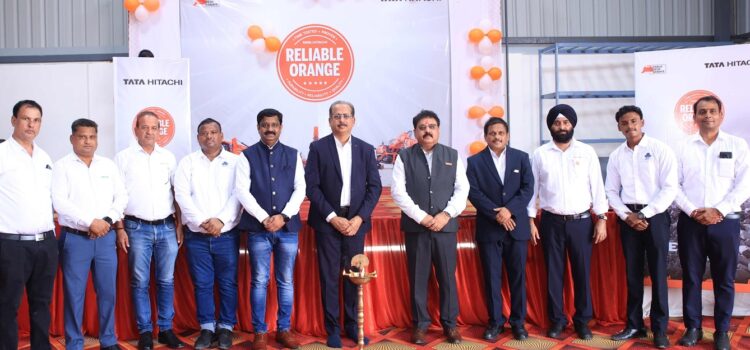
Jaipur, Rajasthan | August 4, 2026: Tata Hitachi, one of India’s leading construction equipment manufacturers, inaugurated its new Regional Sales Office (RSO) at Jobner, Rajasthan, reinforcing its commitment to delivering faster, more efficient and customer-centric solutions across the region.

Strategically located on the rail freight corridor at Jobner, the new Regional Sales Office has been established to strengthen Tata Hitachi’s sales and support network in Rajasthan and neighbouring markets. The facility will improve accessibility for dealers and customers while ensuring quicker response times, enhanced operational efficiency and better coordination across the region. The new RSO is expected to significantly improve product availability by maintaining ready stock closer to the market, enabling faster deliveries and reducing logistics costs and lead time for dealerships. This will also enhance customer convenience by ensuring quicker access to machines, attachments and support, thereby improving overall business responsiveness and equipment uptime.

The facility has been designed to serve as a regional hub that will enable closer engagement with customers, strengthen dealer collaboration and further enhance Tata Hitachi’s customer centric capabilities.

Commenting on the inauguration, Siddharth Chaturvedi, General Manager – Marketing, Tata Hitachi Construction Machinery Pvt. Ltd., said: “The inauguration of our new Regional Sales Office at Jobner is another step towards bringing Tata Hitachi closer to our customers and dealer partners. By strengthening our regional presence, we aim to improve product availability, shorten response times and deliver greater operational efficiency. This facility reinforces our commitment to providing reliable solutions backed by strong customer support and service excellence.”

Following the inauguration, Team Tata Hitachi also hosted a Customer Meet, bringing together customers, dealer partners and industry stakeholders. The event provided an opportunity to engage directly with customers, showcase the company’s latest products and solutions, exchange insights on emerging industry requirements and reinforce Tata Hitachi’s long-term commitment to supporting infrastructure development in the region.

The establishment of the new Regional Sales Office aligns with Tata Hitachi’s continued focus on expanding its customer reach, strengthening its dealer ecosystem and delivering superior ownership experiences through improved accessibility, faster support and enhanced operational efficiency. For further details visit our website www.tatahitachi.co.in

About Tata Hitachi:

Tata Hitachi, one of India’s leading construction machinery companies and the largest Hydraulic Excavator manufacturing company, is a joint venture between Tata Motors and Hitachi Construction Machinery (HCM). The partnership with HCM commenced in 1984 and is today one of the longest-standing JVs in the industry. The company has a manufacturing presence in Dharwad and Kharagpur and over 275 customer-facing touchpoints spread across the country.

Set up in 1961 as the Construction Equipment Business Unit of Tata Engineering and Locomotive Company (TELCO), today, the company boasts a diverse portfolio of Mini Excavators, Construction Excavators, Mining Excavators, Backhoe Loaders, Wheel Loaders, and Dump Trucks, apart from a wide range of Attachments, Parts, and expert Service solutions.

Tata Hitachi is a leader in providing world-class construction equipment to address India’s Infrastructure and Mining needs.

KCR Academy coach Deepali Rokade on nurturing young cricketers the right way

In an era where young cricketers are increasingly exposed to cutting-edge technology, performance analytics, and demanding fitness programmes, Deepali Rokade, coach at KCR Academy, believes the essence of the game should never be lost.

“Cricket is a game of bat and ball. Don’t complicate it for young boys and girls. Keep it simple. If they enjoy the game and master the basics, everything else will follow,” says Rokade.

According to her, every child enters the game with a unique set of abilities, a different learning curve, and their own pace of development. A coach’s responsibility is not to rush that journey but to create an environment where young players feel confident, comfortable, and excited to learn.

At KCR Academy, the focus is on identifying each player’s strengths before introducing advanced techniques. Coaches work closely with every child to build strong fundamentals before gradually developing technical skills, game awareness, and match temperament through structured yet enjoyable training sessions.

“Every child is different. As coaches, we must understand what works for each player instead of expecting every youngster to fit into the same mould. Good coaching is about adapting to the child, not the other way around,” she explains.

One area where Rokade feels parents and coaches need to exercise greater patience is physical conditioning. While fitness is an integral part of modern cricket, she believes children should not be subjected to intense gym sessions or demanding strength programmes too early in their development.

FOR MORE DETAILS LOG ON TO: https://kcr-academy.com/

“Young players need to fall in love with the game first. Their stamina, coordination, agility, balance and strength should develop naturally through cricket-specific drills and age-appropriate training. Overloading children at an early stage can lead to injuries, mental fatigue and, most importantly, a loss of interest in the sport,” she says.

Instead of chasing quick results, KCR Academy is committed to developing complete cricketers. Every session is designed to improve technique, decision-making, physical conditioning and self-belief while ensuring that learning remains enjoyable. Rokade believes patience is one of the most overlooked ingredients in player development. Parents often expect immediate success, but cricket rewards consistency, discipline and perseverance over an extended period.

“There are no shortcuts in cricket. Improvement happens one practice session at a time. Players who trust the process and keep working on the basics are the ones who ultimately succeed,” she says.

She also believes that confidence grows when children are allowed to make mistakes without the fear of failure.

“Mistakes are part of learning. If children are constantly worried about getting things wrong, they stop expressing themselves. Our job is to encourage them, guide them and help them grow with confidence,” Rokade adds.

This philosophy forms the cornerstone of KCR Academy’s coaching methodology. Rather than producing short-term performers, the academy aims to nurture technically sound, mentally resilient and physically prepared cricketers capable of succeeding at every level of the game.

As youth cricket continues to evolve, Deepali Rokade’s message serves as a timely reminder for players, parents and coaches alike: keep the game simple, trust the process, and allow young talent the time and space to flourish.

“Our objective isn’t just to produce good cricketers. We want to develop disciplined, confident individuals who enjoy the sport and continue learning every single day. When the foundation is strong, success naturally follows.”

Mumbai | July 2026 – A grand Kargil Vijay Diwas 2026 Commemoration Event was held in Mumbai to commemorate the 27th anniversary of India’s historic victory in the Kargil War and to pay heartfelt tribute to the courage, sacrifice, and unwavering commitment of the brave soldiers of the Indian Armed Forces. The event served as a solemn reminder of the supreme sacrifices made by the nation’s heroes in safeguarding India’s sovereignty and territorial integrity.

The programme witnessed the presence of distinguished dignitaries, decorated defence veterans, serving and retired Armed Forces personnel, government officials, representatives from leading Public Sector Undertakings (PSUs), banking institutions, educational institutions, youth organizations, and citizens from across Mumbai. The gathering reflected the nation’s collective respect and gratitude towards the brave soldiers who displayed extraordinary courage during the Kargil conflict of 1999.

The event was graced by Brigadier Sudhir Sawant (Retd.), former Member of Parliament, former Member of the Maharashtra Legislative Council (MLC), and retired Brigadier of the Indian Army. Addressing the gathering, Brigadier Sawant highlighted the enduring significance of Kargil Vijay Diwas and emphasized that the sacrifices of the soldiers who fought in the Kargil War continue to inspire generations of Indians. He urged young citizens to uphold the values of patriotism, integrity, discipline, courage, and selfless service to the nation, stressing that national development and security depend upon responsible and committed citizens.

The commemorative ceremony began with floral tributes and homage to the brave martyrs of the Kargil War. A moment of silence was observed in memory of the soldiers who made the supreme sacrifice in defending the country’s borders under extremely challenging conditions. The atmosphere was filled with patriotic fervour as participants united in remembering the courage, determination, and indomitable spirit demonstrated by India’s Armed Forces during one of the nation’s most significant military victories.

The programme featured patriotic cultural performances, motivational addresses, and tributes celebrating the valour of the Indian Army, Navy, and Air Force. These performances highlighted the spirit of national unity and reinforced the importance of remembering the sacrifices made by members of the Armed Forces in protecting the country’s freedom and sovereignty. Students and young participants enthusiastically joined the celebrations, reflecting a growing sense of national pride and respect for the country’s defence personnel.

The event also served as an important platform to strengthen the bond between civilians and the Armed Forces by creating awareness about the significance of Kargil Vijay Diwas and the history of the Kargil conflict. Veterans shared inspiring experiences and encouraged the youth to contribute positively towards nation-building through dedication, discipline, and public service.

The successful organization of the event was made possible through the generous support of several leading Public Sector Undertakings and financial institutions that continue to promote initiatives dedicated to national pride, social responsibility, and community engagement. The event received valuable sponsorship from GAIL (India) Limited, Bank of Baroda (BOB), Bharat Electronics Limited (BEL), Balmer Lawrie & Co. Ltd., The National Small Industries Corporation Limited (NSIC), Hindustan Petroleum Corporation Limited (HPCL), IDBI Bank, NBCC (India) Limited, Indian Renewable Energy Development Agency Limited (IREDA), NTPC Limited, Small Industries Development Bank of India (SIDBI), Bharat Petroleum Corporation Limited (BPCL), Life Insurance Corporation of India (LIC), State Bank of India (SBI), Union Bank of India, REC Limited, Hindustan Aeronautics Limited (HAL), and the National Stock Exchange of India (NSE). Their support played a significant role in making the commemorative programme a meaningful and memorable tribute to India’s brave soldiers.

The Kargil Vijay Diwas 2026 Commemoration Event concluded with a renewed pledge by all participants to honour the legacy of the Kargil heroes by fostering unity, patriotism, and unwavering commitment to the nation. The programme reinforced the message that while the Kargil War remains a defining chapter in India’s military history, the values demonstrated by its brave soldiers—courage, resilience, sacrifice, and devotion to duty—continue to guide and inspire every Indian.

As the nation remembers the heroes of Kargil, the event reaffirmed the collective responsibility of every citizen to preserve the ideals for which these brave soldiers fought and laid down their lives. Their sacrifices remain a timeless reminder that the freedom and security enjoyed by the nation today have been earned through extraordinary courage and selfless service.

Kargil Vijay Diwas is not merely a day of remembrance—it is a celebration of India’s indomitable spirit, the unmatched valour of its Armed Forces, and the enduring legacy of the brave warriors whose sacrifice will forever remain etched in the heart of the nation.

A landmark collaboration uniting India’s oldest business school with Axeno’s Marketing OS to power talent, research, and real-world innovation

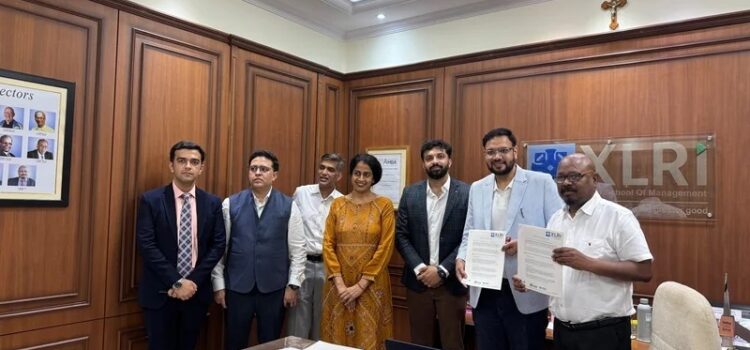
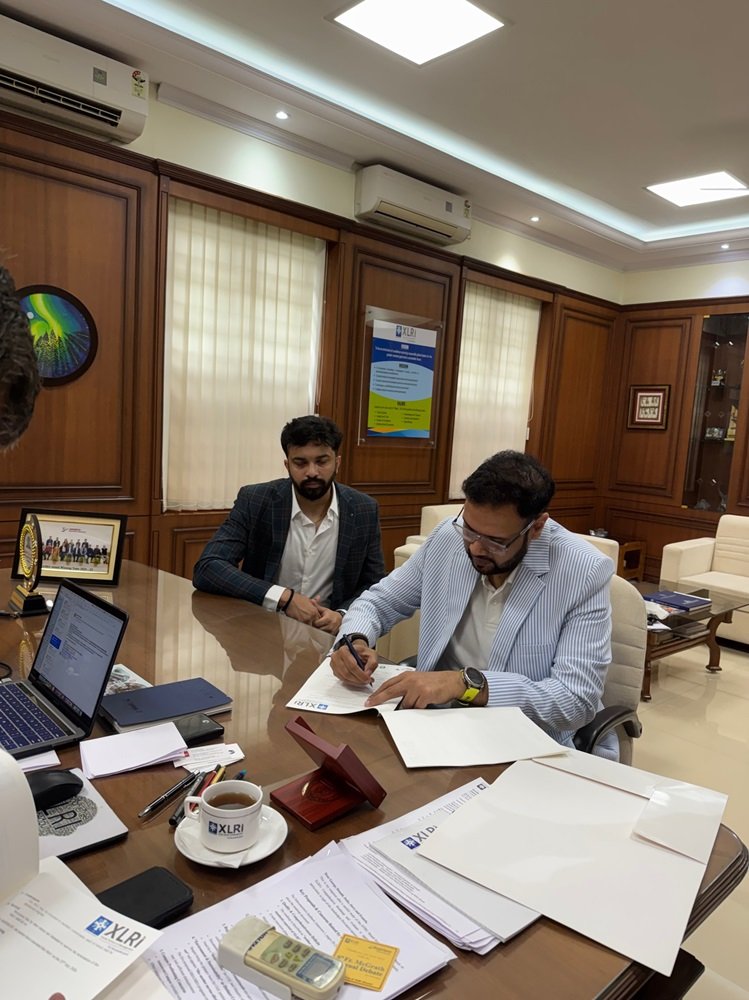
NOIDA and JAMSHEDPUR, India, 29 July 2026. Axeno has signed a Memorandum of Understanding (MoU) with XLRI – Xavier School of Management, Jamshedpur, one of India’s most respected management institutions, to build a lasting framework for collaboration between industry and academia. The MoU was signed on Saturday, 25 July 2026 at the XLRI campus, Jamshedpur.

The collaboration pairs XLRI’s academic depth with Axeno’s mission as a Marketing OS driver. Axeno brings revenue to life for its customers, connecting marketing through to sales and turning technology into real business outcomes. Together, the two will work on learning, research, and talent. Students get exposure to live problems. Axeno’s teams get world-class academic thinking.

At the heart of the agreement is faculty-industry collaboration. Axeno employees get direct access to XLRI’s distinguished faculty. Their lectures and masterclasses feed an Axeno-specific training program. It upskills teams to the latest industry standards. Axeno’s people learn from one of India’s finest institutions. And they stay ahead of a fast-moving market.

Under the MoU, Axeno and XLRI will work together across the following areas:

  • Leadership and CXO interactions
  • Student guest lectures and masterclasses
  • Live consulting projects and experiential learning
  • Campus recruitment and talent engagement
  • Faculty-industry collaboration
  • Joint case study development
  • Research and thought leadership initiatives
  • Executive education and management development program
  • AI, consulting, and digital transformation focused learning initiatives

The partnership is designed to be practical and outcome led. Students will work on real consulting engagements and case studies drawn from Axeno’s client work, while Axeno leaders contribute to classroom sessions, seminars, and roundtables at XLRI. Over time, the two organisations plan to co-develop research and executive programs across marketing, artificial intelligence, and digital transformation.

“XLRI has shaped some of India’s finest business leaders for more than seven decades. This partnership gives our teams and their students a shared space to solve real problems in CX, AI, and digital transformation. We are building a pipeline of talent and ideas that both organisations can grow from.”

Ankur Mittal, Chief Executive Officer, Axeno

The collaboration is also expected to translate directly into value for Axeno’s clients. Joint research, new case studies, and student teams working alongside Axeno consultants will add depth to every engagement, strengthening Axeno’s ability to bring revenue to life for customers from marketing through to sales.

Speaking on the occasion, Prof. Kanagaraj, Convenor – Corporate Relations & Placements, XLRI Jamshedpur, said:

“At XLRI, we believe that meaningful industry partnerships play a pivotal role in shaping responsible and future-ready leaders. Our collaboration with Axeno reflects a shared commitment to advancing knowledge, fostering innovation, and creating experiential learning opportunities for our students. Through this partnership, we look forward to strengthening industry-academia engagement in emerging domains such as Artificial Intelligence, digital transformation, consulting, and marketing.”

About XLRI – Xavier School of Management, Jamshedpur

Founded in 1949, XLRI – Xavier School of Management is India’s oldest business school. Established by the Society of Jesus in the steel city of Jamshedpur, XLRI is accredited by AACSB and AMBA and is consistently ranked among the country’s top management institutions. Known for its focus on ethical leadership and social responsibility, XLRI runs flagship postgraduate program in Business Management and Human Resource Management, along with doctoral and executive education programs, across its Jamshedpur and Delhi-NCR campuses.

About Axeno

Founded in 2014, Axeno is a boutique consulting firm and the driver of the Marketing OS, bringing revenue to life for its customers by connecting marketing through to sales and turning technology into measurable business outcomes. An Adobe Gold Partner headquartered in Noida, India, Axeno works across major industries including automotive, its largest focus at close to half of its work and home to some of the largest automobile brands, along with BFSI, retail, and IT. Learn more at axeno.co.

Media Contact

Rashika Thaurani

Marketing Manager, Axeno

Rashika.thaurani@axeno.co  |  7217629497

axeno.co

Chennai, India, 29 July: MRF invited a nine-year-old violinist to be chief guest at its Club Day. She was honoured on stage, then played, and the audience ended the set on its feet.

The chief guest at a company club day is a fairly settled job. Usually it goes to a senior executive, a retired sportsperson, or a figure from the local establishment. The holder arrives, is garlanded, delivers ten minutes on values and hard work, hands out the prizes, and is escorted out before the tug-of-war.

For Club Day 2026 on 14 March, run by the MRF Recreation Club at the MCC auditorium in Chetpet and scheduled to run from three in the afternoon until half past seven, the slot went to Victoria Isaac.

She is nine years old, she performs as Victoriastic, and she did not deliver ten minutes on values and hard work. She was honoured on stage by Meera Mammen, MRF’s Vice President for Welfare. Then she picked up a violin and the afternoon changed shape.

What actually happens

The thing to understand about Victoria on a stage is that she does not perform at an audience. She performs into one.

She moves while she plays, which is rare enough in a violinist of any age and startling in one who barely clears the lectern. She works across genres rather than staying in the classical lane her training would suggest. And she reads a room, adjusts, and pulls it in with her, which is a skill that has very little to do with age and cannot be taught to most adults.

At the MCC auditorium she played in a printed jacket and a red cap, in front of an LED wall running neon graphics, with her own face carried live on the screen behind her. The set ran interactive, the hall responding as she played, and it finished with the audience standing. MRF employees had come with their families for an afternoon of games and prize-giving. They stayed for a concert.

Victoria Isaac performing at MRF Club Day 2026, MCC Auditorium, Chetpet.

Toy balloons

There is a coincidence in this booking that is worth pausing on.

MRF began in 1946 as a small shed near Madras turning out toy balloons. It took until 1952 for the company to move into tread rubber, and rather longer to become one of the largest tyre manufacturers in the world. The thing that made it was not the balloons. The balloons were just what was in the shed at the time.

Victoria’s parents bought her instruments as toys. She had started reproducing nursery rhymes by ear on a phone app at the age of three, and the instruments that followed were treated as playthings rather than as a curriculum. Nobody in the family drew up a plan. The playing became the work on its own.

A company that started with toy balloons handing its stage to a child who started with toy instruments is the sort of symmetry that nobody arranged and everybody in the room could feel.

Four things a booker is actually getting

Her record is usually presented as a list of certificates. Sorted by what it means for a stage, it looks different.

  • She is a verified world record holder: Guinness World Records certified her in Chennai on 6 October 2025 as the world’s Youngest Music Producer (Female), at eight years and 160 days. Not a claim, not a nomination. A certificate that survived an audit.
  • She makes the music, she does not only play it: The qualifying work was Musically Fantastic, a twelve-track album she produced end to end herself. She is separately recognised as the youngest music entrepreneur to launch an independent music label under a registered company, Victoriastic Limited. She is, at nine, a producer with a company behind her.
  • She is a live act, not a recital: She holds four India Book of Records titles, and the useful ones here are the physical: playing different instruments while skate dancing, and performing nineteen instruments on Ek Pyaar Ka Nagma Hai in under seventeen minutes. She is recognised as the youngest violinist to perform Vivaldi’s The Four Seasons while skate dancing, seven minutes of baroque repertoire on roller skates. Her most recent record is for 62 solo performances across district, state and national platforms. She has played a lot of rooms.
  • She comes with a story an audience can hold: Guinness rejected her submissions more than once before certifying the record. Her parents mention the rejections before they mention the title. For an employee audience, that lands harder than the trophy does.

The welfare fit

That Meera Mammen honoured her is not incidental to the argument. Welfare is the portfolio, and Victoria’s work sits closer to it than most bookings would.

Under a banner she calls Melodies of Memories, she plays live violin at senior care homes, palliative care centres and community halls across Chennai, and intends to formalise it as a foundation. That work, rather than any of her records, earned her a Changemaker Impact Award under the Heroes of Tomorrow campaign run nationally with the United Nations. In March 2026 she recorded the Chengalpattu district anthem for a voter-awareness campaign with the District Collectorate and Collector Malathi Helen.

In other words she is not only an act. She is a fit for the part of a company that runs employee wellbeing and community programmes, which is a different budget line and a more interesting conversation.

The diary

The MRF booking sits in a year that has taken her across a wider range of stages than most working musicians manage. Femina put her on its cover in February 2026. The Hindustan Group of Institutions named her Child Prodigy of the Year at the Dr. K.C.G. Verghese Excellence Awards. The South India Women Achievers Awards named her Outstanding Artist in Bengaluru. Pride India Awards named her Young Prodigy of the Year at the Indian Icon Awards in Hyderabad. She has taken first prize for violin at Classical Music Stars, an international contest, and gold in skate dancing at district, state and national level in two consecutive years.

She trains at the KM Music Conservatory in Chennai, the school A.R. Rahman founded, and is home-schooled to make room for it.

What she says she wants is a bigger stage, more of her own music, and a Grammy eventually. On the evidence of a March afternoon in Chetpet, the companies booking her are getting the better end of the deal for now.


As organizations increase their reliance on business intelligence, analytics, and artificial intelligence, many are facing a familiar problem: demand for data-driven insights is growing faster than central data teams can deliver.

According to insights shared by Kamal Yadav, Principal Data and Insight Analyst at Brambles, the challenge is not only about limited resources. It is also about how data work is structured, prioritized, governed, and delivered across the organization.

Business teams now expect faster dashboards, automated reporting, predictive insights, and AI-enabled decision support. At the same time, central data teams remain responsible for maintaining trusted reports, protecting sensitive information, managing governance, ensuring consistent definitions, and supporting existing business-critical data services.

This creates a delivery bottleneck. Too many requests enter one central queue, while limited teams are expected to respond quickly without compromising quality or control.

When lead times become too long, business users often find their own alternatives. They may return to Excel, create local dashboards, or build manual reporting workarounds. These short-term fixes may appear practical, but they can create long-term problems. Different teams may begin using different numbers, definitions, and assumptions. Over time, reporting becomes duplicated, data quality becomes harder to manage, and trust in analytics starts to weaken.

The solution is not simply to hire more people. Additional resources may help, but they do not fix the deeper operating model issue. Organizations need a clearer way to manage demand, prioritize work, distribute ownership, enable self-service, and apply governance in a way that supports delivery rather than slowing it down.

Separating Run Work From Build Work

One of the first steps is to separate “run the business” work from “build the business” work.

Run work includes core dashboards, regulatory reporting, recurring performance reports, financial reporting, operational scorecards, and other business-critical data services. These activities require stability, service levels, ownership, and ongoing support.

Build work is different. It includes new dashboards, analytics products, AI use cases, predictive models, platform upgrades, and innovation projects. These initiatives are usually focused on future capability, transformation, or value creation.

When both types of work are placed in the same queue, delivery teams are constantly pulled in different directions. Urgent reporting issues interrupt strategic projects, while new initiatives can delay essential operational support. Over time, both run and build work suffer.

A stronger approach is to create separate delivery tracks with different prioritization rules. Run work should protect business continuity. Build work should be prioritized based on business value, urgency, complexity, and strategic importance.

This gives data teams a clearer view of capacity and helps business stakeholders understand the trade-offs involved.

Creating a Stronger Intake Function

Many BI and AI backlogs grow because requests enter delivery before they are properly understood.

A business user may ask for “a simple dashboard” or “one additional chart,” but the real work may involve missing source data, unclear metric definitions, complex integration, security constraints, or governance questions.

A dedicated intake function can reduce this problem significantly.

The intake team should act as the front door for data requests. Its role is to clarify the business need, understand the decision the request supports, assess value, identify complexity, estimate effort, and route the work to the right delivery path.

This function should include data business analysts who understand both business context and data complexity. These roles are different from traditional business analysts. They need to understand data sources, reporting logic, ownership, definitions, quality issues, and governance requirements.

Good intake prevents poorly defined requests from overwhelming delivery teams. It also helps identify whether a request should become a strategic data product, an enhancement to an existing report, a self-service use case, a quick analysis, or a lower-priority backlog item.

Using Product-Centric Delivery Pods

Another common cause of delay is fragmented delivery ownership.

In many organizations, data engineering, reporting, testing, governance, and business engagement sit in separate teams. Work moves from one group to another, creating handoffs, delays, and unclear accountability.

Product-centric delivery pods can help solve this problem.

A pod brings together the skills needed to deliver an outcome from end to end. Depending on the use case, this may include data engineers, BI developers, analysts, testers, governance specialists, and a product owner.

The product owner is responsible for the full lifecycle of the work. This includes understanding the business need, prioritizing the backlog, aligning stakeholders, overseeing delivery, and ensuring adoption.

For regulated or sensitive areas, privacy and compliance experts should be involved early. This prevents governance issues from appearing late in the process and delaying delivery.

The pod model does not need to be introduced across the entire organization at once. It can start with a few high-value use cases, demonstrate results, and then scale gradually.

Building a Core Reporting Backbone

Many organizations lose valuable capacity by repeatedly building similar dashboards for different teams.

One business unit may create a sales report, another may create a slightly different version, and a third may build its own view using different definitions. The same pattern often appears across finance, operations, customer, supply chain, and product reporting.

A core reporting backbone helps reduce this duplication.

This means defining a standard set of enterprise dashboards, metrics, and datasets that serve the majority of recurring reporting needs. These reports should be built on trusted data, agreed definitions, and consistent governance.

A strong reporting backbone gives the organization a common language for performance. It also helps prioritize delivery. Requests that improve or extend core reporting can be prioritized, while highly local or low-value requests can be directed toward self-service.

This approach does not remove the need for local analysis. Business teams still need flexibility. However, they should be building on a trusted foundation rather than recreating the same reporting logic in different places.

Focusing on Time-to-Insight

Traditional delivery models often focus on completing the requested deliverable. But a more important question is whether the business receives the insight in time to act on it.

A dashboard delivered after three months may be technically correct, but it may arrive too late to influence the decision it was meant to support.

Organizations need to focus on time-to-insight.

Not every request requires a fully industrialized dashboard. Some needs may be met through a quick analysis, a certified dataset, a prototype, or a self-service report. The delivery approach should match the urgency, value, and risk of the decision.

For high-risk reporting, such as financial, regulatory, or sensitive customer data, stronger controls may be necessary. For low-risk exploratory analysis, a lighter delivery path may be more appropriate.

The key question should be: what is the fastest safe way to help the business make a trusted decision?

Treating Self-Service as a Spectrum

Self-service analytics is often presented as a simple choice. Either the central data team delivers everything, or business users are left to build everything themselves.

In reality, self-service should be treated as a spectrum.

Some users only need access to standard dashboards. Others can create reports from certified datasets. More advanced users may work with governed data marts, semantic models, or approved analytics tools. A smaller group may be trained to perform deeper analysis or build local dashboards within defined guardrails.

The level of freedom should match the user’s capability and the risk of the data involved.

Low-risk analysis can move with lighter controls. High-risk reporting, regulatory data, sensitive customer information, or enterprise-level metrics require stronger governance.

Self-service should not mean uncontrolled reporting. Without proper guardrails, it can lead to duplicated dashboards, inconsistent metrics, and compliance exposure. Successful self-service requires certified datasets, role-based access, metadata, clear ownership, training, and support.

Designing Governance Into the Data Environment

Governance should not be treated only as a final approval step. If every request has to pass through heavy stage gates, governance becomes a bottleneck. At the same time, removing governance entirely creates risk.

A better approach is governance by design.

Controls should be built into the data environment from the beginning. This includes role-based access, data classification, metadata tagging, approved definitions, lineage, privacy controls, and certified data products.

This allows users to explore and analyze data safely within defined boundaries. Low-risk work can move through lighter pathways, while high-risk use cases receive more formal review.

The principle should be simple: apply the level of governance required by the risk, but no more than necessary.

This approach helps organizations maintain trust and accountability without slowing down every request.

Making Existing Assets Visible

A major source of inefficiency is lack of visibility.

Teams often build new dashboards, datasets, or reports without knowing that similar assets already exist elsewhere in the organization. This leads to duplication, inconsistent reporting, and wasted capacity.

Creating an internal catalogue of dashboards, datasets, reports, and data products can help solve this problem.

The catalogue should be searchable and easy to use. It should show what exists, who owns it, what data it uses, whether it is certified, and how it should be interpreted.

This encourages reuse and helps teams connect with existing owners before starting new development. It also gives the central data function a clearer view of demand patterns and opportunities to consolidate reporting.

Repositioning the Central Data Team

To reduce BI and AI bottlenecks, the central data team cannot remain the only delivery engine. It must become an enabler of scalable data use.

This means focusing central capacity on the work that truly requires enterprise-level expertise. That includes core reporting, strategic data products, governance standards, data platforms, semantic models, and high-value AI and analytics use cases.

Business teams, meanwhile, can take greater responsibility for local insight generation within governed boundaries.

This creates a hub-and-spoke model. The central team provides the foundation, standards, platforms, and controls. Business teams use that foundation to answer more of their own questions safely and consistently.

Done well, this model allows organizations to scale analytics without losing control.

Conclusion

BI and AI delivery bottlenecks are rarely caused by demand alone. They are usually caused by unclear intake, weak prioritization, fragmented ownership, duplicated reporting, and governance models that do not scale.

The answer is not simply to add more people or push more work through the same central queue. Organizations need a stronger operating model.

Based on insights from Kamal Yadav, Principal Data and Insight Analyst at Brambles, the path forward involves separating run and build work, creating a dedicated intake function, using product-centric delivery pods, building a core reporting backbone, enabling governed self-service, designing governance into the data environment, and making existing assets visible.

The ultimate goal is not to deliver every dashboard faster. The goal is to help the business reach trusted insight quickly, safely, and consistently.


There are many changes happening within the beauty and wellness market, where more consumers are moving away from topical solutions and embracing a more holistic way of retaining their skin health. People are beginning to understand that instead of using creams and serums, they need to make sure they nourish their skin from the inside out. This has resulted in the emergence of a new trend – which is taking care of your skin with use of collagen supplements.

One specific type of collagen supplements is marine collagen supplement, which is popular due to its high bioavailability and the presence of Type I collagen. Among the available options, Glutone Revive Marine Collagen Tablet is one such formulation that aligns with this growing consumer preference.

Beauty-From-Within Is Shaping Modern Skincare Choices

Modern consumers are much more educated than ever. Skincare, wellness, and science education have made people think about their beauty routine on a deeper level. In addition to cleansing, moisturizing, and protecting skin from the sun, people have come to see that nutritional supplementation is an integral part of their self-care routine.

It is widely known that skin health depends not only on skincare routines but on aspects such as proper hydration, diet, quality of sleep, stress levels, and exposure to the environment. As one of the main structural proteins, collagen naturally depletes with age, which makes people pay more attention to it.

While being more aware of the importance of collagen, people see it not as just another wellness trend but as a part of their balanced lifestyle.

Another important aspect is that consumers today give much more importance to preventive nutrition. People no longer adopt new wellness routines when faced with some concerns; instead, they look for a solution that will go well with their healthy lifestyle.

Why Marine Collagen Is Receiving Increased Attention?

Marine collagen has steadily become more popular due to the presence of predominantly Type I collagen in it that is commonly present in human skin. The small peptide composition is widely known to be effective in providing better absorption rates. Another reason for its popularity is convenience, with formulations like Glutone Revive Marine Collagen Tablet fitting easily into daily routines.

Industry experts also report that consumers take more care of ingredient quality, transparency of formulation, and reputable manufacturing processes when it comes to buying wellness products. Checking ingredients, understanding the formulation, and buying products from reputable companies is becoming a common practice. It has motivated producers to work on well-developed formulations.

What Makes Glutone Revive Marine Collagen Tablet Stand Out?

Glutone Revive Marine Collagen Tablet contains 2500 mg of Wellnex™ Di-peptide Marine Collagen with Vitamin C and is formulated to enrich natural collagen formation. The bioavailable marine collagen peptides present helps in better absorption and is available as an effervescent tablet that dissolves easily in water.  It contains no sugar and is ideal for ones with diabetic conditions as well. The tablets do not have the typical fishy aftertaste and can be easily incorporated in one’s daily wellness routine.

Growing Awareness Around Skin Hydration and Elasticity

Hydration, firmness, and elasticity are some of the factors associated with healthy skin. As much as topical products help in taking care of skin at  surface level, nutrition also helps in maintaining overall skin health.

The realization of this knowledge has led to people showing increased interests in collagen supplement benefits for their skin. In addition to proper nutrition, adequate hydration, physical activities, and sleep, the use of collagen supplements has become one of the components of healthy living.

A Shift Towards Smarter Wellness Choices

Increasing demand for collagen supplements is indicative of changing consumer needs. In today’s world, consumers are looking for products that bring together convenience with proper selection of ingredients and high-quality production. These evolving consumer preferences have also contributed to the growing interest in formulations such as Glutone Revive Marine Collagen Tablet among individuals seeking marine collagen supplements

While selecting a collagen supplement, consumers take into consideration different aspects like ingredients, manufacturing practices, and reliability of the product. Nevertheless, it remains true that health professionals suggest supplements should be used in combination with proper nutrition, drinking enough water, using sunscreen, and sleeping sufficiently.

Way Ahead

With consumer interest shifting towards scientifically proven beauty solutions and growing awareness of collagen supplement benefits, they are commonly adopted by many who pay attention to their skin care regimen. Rather than replacing other healthy practices, it becomes one of the elements that add to balanced nutrition and self-care routine as a whole. Reflecting these evolving preferences, Glutone Revive Marine Collagen Tablet is one such marine collagen formulation designed to complement a balanced wellness routine.