Home
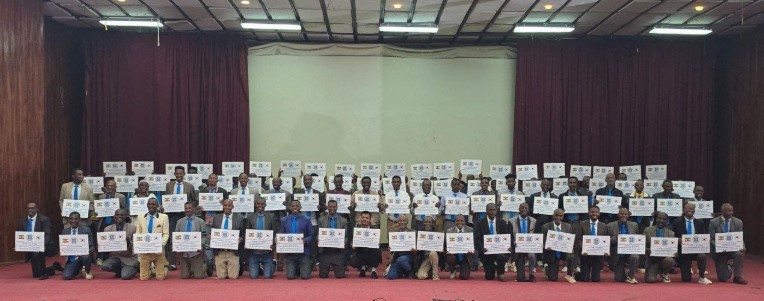
A total of 84 churches across 10 cities in Ethiopia have officially changed their church signboard names to Shincheonji Church of Jesus, the Temple of the Tabernacle of the Testimony (Chairman: Lee Man-hee, hereinafter “Shincheonji Church of Jesus”). On the 10
th
, the Peter Tribe of Shincheonji held the “Ethiopia 84 Churches Signboard Changing Ceremony.” During the event, 84 church pastors declared that they had become members of Shincheonji Church of Jesus, committed to preaching the Word of the New Covenant Revelation, and resolved to become one through the “revealed Word.” This development stems from the participation of Pastor Asefa Angeto (President of the Misgana Denomination Association) in the “2
nd
Global Invitation Revelation Seminar” held last November at Shincheonji Cheongju Church. After returning to his home country, Ethiopia, Pastor Asefa continued to lead local seminars based on the Word he had learned. Pastor Asefa had traveled to over 100 churches in 10 cities, conducting seminars and testifying to the revealed Word he learned from Shincheonji. This signboard replacement is being regarded as more than a simple change of signage—it is seen as a major breakthrough in spreading a Word-centered transformation across the Ethiopian Christian community. At the commemorative ceremony, the 84 representative pastors declared, “We have become members of Shincheonji Church of Jesus, having mastered the Word of the New Covenant Revelation. We resolve to preach this Word throughout Ethiopia, so that both pastors and believers alike may follow only the truth and devote themselves more fervently to the ministry of the Word.” A representative of the Peter Tribe of Shincheonji stated, “Currently, 181 pastors in Ethiopia are learning the revealed Word from Shincheonji Church of Jesus. We will continue to make known the fact that the prophecies of Revelation have been fulfilled today, and we will do our utmost so that churches around the world may become united through the Word.”
Fashion
A total of 84 churches across 10 cities in Ethiopia have officially changed their church signboard names to Shincheonji Church of Jesus, the Temple of the Tabernacle of the Testimony (Chairman: Lee Man-hee, hereinafter “Shincheonji Church of Jesus”). On the 10
th
, the Peter Tribe of Shincheonji held the “Ethiopia 84 Churches Signboard Changing Ceremony.” During the event, 84 church pastors declared that they had become members of Shincheonji Church of Jesus, committed to preaching the Word of the New Covenant Revelation, and resolved to become one through the “revealed Word.” This development stems from the participation of Pastor Asefa Angeto (President of the Misgana Denomination Association) in the “2
nd
Global Invitation Revelation Seminar” held last November at Shincheonji Cheongju Church. After returning to his home country, Ethiopia, Pastor Asefa continued to lead local seminars based on the Word he had learned. Pastor Asefa had traveled to over 100 churches in 10 cities, conducting seminars and testifying to the revealed Word he learned from Shincheonji. This signboard replacement is being regarded as more than a simple change of signage—it is seen as a major breakthrough in spreading a Word-centered transformation across the Ethiopian Christian community. At the commemorative ceremony, the 84 representative pastors declared, “We have become members of Shincheonji Church of Jesus, having mastered the Word of the New Covenant Revelation. We resolve to preach this Word throughout Ethiopia, so that both pastors and believers alike may follow only the truth and devote themselves more fervently to the ministry of the Word.” A representative of the Peter Tribe of Shincheonji stated, “Currently, 181 pastors in Ethiopia are learning the revealed Word from Shincheonji Church of Jesus. We will continue to make known the fact that the prophecies of Revelation have been fulfilled today, and we will do our utmost so that churches around the world may become united through the Word.”
General News
A total of 84 churches across 10 cities in Ethiopia have officially changed their church signboard names to Shincheonji Church of Jesus, the Temple of the Tabernacle of the Testimony (Chairman: Lee Man-hee, hereinafter “Shincheonji Church of Jesus”). On the 10
th
, the Peter Tribe of Shincheonji held the “Ethiopia 84 Churches Signboard Changing Ceremony.” During the event, 84 church pastors declared that they had become members of Shincheonji Church of Jesus, committed to preaching the Word of the New Covenant Revelation, and resolved to become one through the “revealed Word.” This development stems from the participation of Pastor Asefa Angeto (President of the Misgana Denomination Association) in the “2
nd
Global Invitation Revelation Seminar” held last November at Shincheonji Cheongju Church. After returning to his home country, Ethiopia, Pastor Asefa continued to lead local seminars based on the Word he had learned. Pastor Asefa had traveled to over 100 churches in 10 cities, conducting seminars and testifying to the revealed Word he learned from Shincheonji. This signboard replacement is being regarded as more than a simple change of signage—it is seen as a major breakthrough in spreading a Word-centered transformation across the Ethiopian Christian community. At the commemorative ceremony, the 84 representative pastors declared, “We have become members of Shincheonji Church of Jesus, having mastered the Word of the New Covenant Revelation. We resolve to preach this Word throughout Ethiopia, so that both pastors and believers alike may follow only the truth and devote themselves more fervently to the ministry of the Word.” A representative of the Peter Tribe of Shincheonji stated, “Currently, 181 pastors in Ethiopia are learning the revealed Word from Shincheonji Church of Jesus. We will continue to make known the fact that the prophecies of Revelation have been fulfilled today, and we will do our utmost so that churches around the world may become united through the Word.”
Health
A total of 84 churches across 10 cities in Ethiopia have officially changed their church signboard names to Shincheonji Church of Jesus, the Temple of the Tabernacle of the Testimony (Chairman: Lee Man-hee, hereinafter “Shincheonji Church of Jesus”). On the 10
th
, the Peter Tribe of Shincheonji held the “Ethiopia 84 Churches Signboard Changing Ceremony.” During the event, 84 church pastors declared that they had become members of Shincheonji Church of Jesus, committed to preaching the Word of the New Covenant Revelation, and resolved to become one through the “revealed Word.” This development stems from the participation of Pastor Asefa Angeto (President of the Misgana Denomination Association) in the “2
nd
Global Invitation Revelation Seminar” held last November at Shincheonji Cheongju Church. After returning to his home country, Ethiopia, Pastor Asefa continued to lead local seminars based on the Word he had learned. Pastor Asefa had traveled to over 100 churches in 10 cities, conducting seminars and testifying to the revealed Word he learned from Shincheonji. This signboard replacement is being regarded as more than a simple change of signage—it is seen as a major breakthrough in spreading a Word-centered transformation across the Ethiopian Christian community. At the commemorative ceremony, the 84 representative pastors declared, “We have become members of Shincheonji Church of Jesus, having mastered the Word of the New Covenant Revelation. We resolve to preach this Word throughout Ethiopia, so that both pastors and believers alike may follow only the truth and devote themselves more fervently to the ministry of the Word.” A representative of the Peter Tribe of Shincheonji stated, “Currently, 181 pastors in Ethiopia are learning the revealed Word from Shincheonji Church of Jesus. We will continue to make known the fact that the prophecies of Revelation have been fulfilled today, and we will do our utmost so that churches around the world may become united through the Word.”
Lifestyle
A total of 84 churches across 10 cities in Ethiopia have officially changed their church signboard names to Shincheonji Church of Jesus, the Temple of the Tabernacle of the Testimony (Chairman: Lee Man-hee, hereinafter “Shincheonji Church of Jesus”). On the 10
th
, the Peter Tribe of Shincheonji held the “Ethiopia 84 Churches Signboard Changing Ceremony.” During the event, 84 church pastors declared that they had become members of Shincheonji Church of Jesus, committed to preaching the Word of the New Covenant Revelation, and resolved to become one through the “revealed Word.” This development stems from the participation of Pastor Asefa Angeto (President of the Misgana Denomination Association) in the “2
nd
Global Invitation Revelation Seminar” held last November at Shincheonji Cheongju Church. After returning to his home country, Ethiopia, Pastor Asefa continued to lead local seminars based on the Word he had learned. Pastor Asefa had traveled to over 100 churches in 10 cities, conducting seminars and testifying to the revealed Word he learned from Shincheonji. This signboard replacement is being regarded as more than a simple change of signage—it is seen as a major breakthrough in spreading a Word-centered transformation across the Ethiopian Christian community. At the commemorative ceremony, the 84 representative pastors declared, “We have become members of Shincheonji Church of Jesus, having mastered the Word of the New Covenant Revelation. We resolve to preach this Word throughout Ethiopia, so that both pastors and believers alike may follow only the truth and devote themselves more fervently to the ministry of the Word.” A representative of the Peter Tribe of Shincheonji stated, “Currently, 181 pastors in Ethiopia are learning the revealed Word from Shincheonji Church of Jesus. We will continue to make known the fact that the prophecies of Revelation have been fulfilled today, and we will do our utmost so that churches around the world may become united through the Word.”
Arts & Entertainment
A total of 84 churches across 10 cities in Ethiopia have officially changed their church signboard names to Shincheonji Church of Jesus, the Temple of the Tabernacle of the Testimony (Chairman: Lee Man-hee, hereinafter “Shincheonji Church of Jesus”). On the 10
th
, the Peter Tribe of Shincheonji held the “Ethiopia 84 Churches Signboard Changing Ceremony.” During the event, 84 church pastors declared that they had become members of Shincheonji Church of Jesus, committed to preaching the Word of the New Covenant Revelation, and resolved to become one through the “revealed Word.” This development stems from the participation of Pastor Asefa Angeto (President of the Misgana Denomination Association) in the “2
nd
Global Invitation Revelation Seminar” held last November at Shincheonji Cheongju Church. After returning to his home country, Ethiopia, Pastor Asefa continued to lead local seminars based on the Word he had learned. Pastor Asefa had traveled to over 100 churches in 10 cities, conducting seminars and testifying to the revealed Word he learned from Shincheonji. This signboard replacement is being regarded as more than a simple change of signage—it is seen as a major breakthrough in spreading a Word-centered transformation across the Ethiopian Christian community. At the commemorative ceremony, the 84 representative pastors declared, “We have become members of Shincheonji Church of Jesus, having mastered the Word of the New Covenant Revelation. We resolve to preach this Word throughout Ethiopia, so that both pastors and believers alike may follow only the truth and devote themselves more fervently to the ministry of the Word.” A representative of the Peter Tribe of Shincheonji stated, “Currently, 181 pastors in Ethiopia are learning the revealed Word from Shincheonji Church of Jesus. We will continue to make known the fact that the prophecies of Revelation have been fulfilled today, and we will do our utmost so that churches around the world may become united through the Word.”
Technology
A total of 84 churches across 10 cities in Ethiopia have officially changed their church signboard names to Shincheonji Church of Jesus, the Temple of the Tabernacle of the Testimony (Chairman: Lee Man-hee, hereinafter “Shincheonji Church of Jesus”). On the 10
th
, the Peter Tribe of Shincheonji held the “Ethiopia 84 Churches Signboard Changing Ceremony.” During the event, 84 church pastors declared that they had become members of Shincheonji Church of Jesus, committed to preaching the Word of the New Covenant Revelation, and resolved to become one through the “revealed Word.” This development stems from the participation of Pastor Asefa Angeto (President of the Misgana Denomination Association) in the “2
nd
Global Invitation Revelation Seminar” held last November at Shincheonji Cheongju Church. After returning to his home country, Ethiopia, Pastor Asefa continued to lead local seminars based on the Word he had learned. Pastor Asefa had traveled to over 100 churches in 10 cities, conducting seminars and testifying to the revealed Word he learned from Shincheonji. This signboard replacement is being regarded as more than a simple change of signage—it is seen as a major breakthrough in spreading a Word-centered transformation across the Ethiopian Christian community. At the commemorative ceremony, the 84 representative pastors declared, “We have become members of Shincheonji Church of Jesus, having mastered the Word of the New Covenant Revelation. We resolve to preach this Word throughout Ethiopia, so that both pastors and believers alike may follow only the truth and devote themselves more fervently to the ministry of the Word.” A representative of the Peter Tribe of Shincheonji stated, “Currently, 181 pastors in Ethiopia are learning the revealed Word from Shincheonji Church of Jesus. We will continue to make known the fact that the prophecies of Revelation have been fulfilled today, and we will do our utmost so that churches around the world may become united through the Word.”
Category: Latest News
Home
Latest News
India Press Releases
September 17, 2025
2 min read
84 Churches in Ethiopia Change Their Church Signboards to Shincheonji Church of Jesus, The Temple of the Tabernacle of the Testimony
India Press Releases
September 3, 2025
4 min read
Vladivostok to Host Discussion on New Architecture of Global Trade at Open Dialogue
India Press Releases
August 30, 2025
2 min read
Jitendr Andhale: Why Execution and ESG Will Define India’s Next Infrastructure Chapter
India Press Releases
August 28, 2025
7 min read
BERSACHE: India’s Biggest D2C Footwear Brand Built by Pankaj Garg Without Funding
India Press Releases
August 5, 2025
3 min read
Delhi-Based Lawyer Anshul Kumar Pandey certified by Harvard Law School and Berkman Klein Centre for Internet and Society
India Press Releases
August 5, 2025
2 min read
String Metaverse Ltd Reports Q1 FY26 Consolidated Revenue of ₹199 Cr and PAT of ₹18.29 Cr
India Press Releases
July 1, 2025
5 min read
Ravindra Chavan Appointed as Maharashtra BJP President: A Grassroots Karyakarta to Lead with Ideology, Strategy, and Commitment
India Press Releases
June 20, 2025
4 min read
India Gears Up for Internet Naming Revolution as ICANN Prepares New gTLD Round
India Press Releases
January 16, 2025
3 min read
Jakarta Murugan Temple: A New Spiritual Landmark for Unity and Heritage Marking the Maha Kumbhabhishekam Ceremony on 2 February 2025
India Press Releases
December 6, 2024
6 min read
What is the Next Growth Story of BHARAT?
Prev.
1
2
3
4
5
Next
Newsletter