
As organizations increase their reliance on business intelligence, analytics, and artificial intelligence, many are facing a familiar problem: demand for data-driven insights is growing faster than central data teams can deliver.

According to insights shared by Kamal Yadav, Principal Data and Insight Analyst at Brambles, the challenge is not only about limited resources. It is also about how data work is structured, prioritized, governed, and delivered across the organization.

Business teams now expect faster dashboards, automated reporting, predictive insights, and AI-enabled decision support. At the same time, central data teams remain responsible for maintaining trusted reports, protecting sensitive information, managing governance, ensuring consistent definitions, and supporting existing business-critical data services.

This creates a delivery bottleneck. Too many requests enter one central queue, while limited teams are expected to respond quickly without compromising quality or control.

When lead times become too long, business users often find their own alternatives. They may return to Excel, create local dashboards, or build manual reporting workarounds. These short-term fixes may appear practical, but they can create long-term problems. Different teams may begin using different numbers, definitions, and assumptions. Over time, reporting becomes duplicated, data quality becomes harder to manage, and trust in analytics starts to weaken.

The solution is not simply to hire more people. Additional resources may help, but they do not fix the deeper operating model issue. Organizations need a clearer way to manage demand, prioritize work, distribute ownership, enable self-service, and apply governance in a way that supports delivery rather than slowing it down.

Separating Run Work From Build Work

One of the first steps is to separate “run the business” work from “build the business” work.

Run work includes core dashboards, regulatory reporting, recurring performance reports, financial reporting, operational scorecards, and other business-critical data services. These activities require stability, service levels, ownership, and ongoing support.

Build work is different. It includes new dashboards, analytics products, AI use cases, predictive models, platform upgrades, and innovation projects. These initiatives are usually focused on future capability, transformation, or value creation.

When both types of work are placed in the same queue, delivery teams are constantly pulled in different directions. Urgent reporting issues interrupt strategic projects, while new initiatives can delay essential operational support. Over time, both run and build work suffer.

A stronger approach is to create separate delivery tracks with different prioritization rules. Run work should protect business continuity. Build work should be prioritized based on business value, urgency, complexity, and strategic importance.

This gives data teams a clearer view of capacity and helps business stakeholders understand the trade-offs involved.

Creating a Stronger Intake Function

Many BI and AI backlogs grow because requests enter delivery before they are properly understood.

A business user may ask for “a simple dashboard” or “one additional chart,” but the real work may involve missing source data, unclear metric definitions, complex integration, security constraints, or governance questions.

A dedicated intake function can reduce this problem significantly.

The intake team should act as the front door for data requests. Its role is to clarify the business need, understand the decision the request supports, assess value, identify complexity, estimate effort, and route the work to the right delivery path.

This function should include data business analysts who understand both business context and data complexity. These roles are different from traditional business analysts. They need to understand data sources, reporting logic, ownership, definitions, quality issues, and governance requirements.

Good intake prevents poorly defined requests from overwhelming delivery teams. It also helps identify whether a request should become a strategic data product, an enhancement to an existing report, a self-service use case, a quick analysis, or a lower-priority backlog item.

Using Product-Centric Delivery Pods

Another common cause of delay is fragmented delivery ownership.

In many organizations, data engineering, reporting, testing, governance, and business engagement sit in separate teams. Work moves from one group to another, creating handoffs, delays, and unclear accountability.

Product-centric delivery pods can help solve this problem.

A pod brings together the skills needed to deliver an outcome from end to end. Depending on the use case, this may include data engineers, BI developers, analysts, testers, governance specialists, and a product owner.

The product owner is responsible for the full lifecycle of the work. This includes understanding the business need, prioritizing the backlog, aligning stakeholders, overseeing delivery, and ensuring adoption.

For regulated or sensitive areas, privacy and compliance experts should be involved early. This prevents governance issues from appearing late in the process and delaying delivery.

The pod model does not need to be introduced across the entire organization at once. It can start with a few high-value use cases, demonstrate results, and then scale gradually.

Building a Core Reporting Backbone

Many organizations lose valuable capacity by repeatedly building similar dashboards for different teams.

One business unit may create a sales report, another may create a slightly different version, and a third may build its own view using different definitions. The same pattern often appears across finance, operations, customer, supply chain, and product reporting.

A core reporting backbone helps reduce this duplication.

This means defining a standard set of enterprise dashboards, metrics, and datasets that serve the majority of recurring reporting needs. These reports should be built on trusted data, agreed definitions, and consistent governance.

A strong reporting backbone gives the organization a common language for performance. It also helps prioritize delivery. Requests that improve or extend core reporting can be prioritized, while highly local or low-value requests can be directed toward self-service.

This approach does not remove the need for local analysis. Business teams still need flexibility. However, they should be building on a trusted foundation rather than recreating the same reporting logic in different places.

Focusing on Time-to-Insight

Traditional delivery models often focus on completing the requested deliverable. But a more important question is whether the business receives the insight in time to act on it.

A dashboard delivered after three months may be technically correct, but it may arrive too late to influence the decision it was meant to support.

Organizations need to focus on time-to-insight.

Not every request requires a fully industrialized dashboard. Some needs may be met through a quick analysis, a certified dataset, a prototype, or a self-service report. The delivery approach should match the urgency, value, and risk of the decision.

For high-risk reporting, such as financial, regulatory, or sensitive customer data, stronger controls may be necessary. For low-risk exploratory analysis, a lighter delivery path may be more appropriate.

The key question should be: what is the fastest safe way to help the business make a trusted decision?

Treating Self-Service as a Spectrum

Self-service analytics is often presented as a simple choice. Either the central data team delivers everything, or business users are left to build everything themselves.

In reality, self-service should be treated as a spectrum.

Some users only need access to standard dashboards. Others can create reports from certified datasets. More advanced users may work with governed data marts, semantic models, or approved analytics tools. A smaller group may be trained to perform deeper analysis or build local dashboards within defined guardrails.

The level of freedom should match the user’s capability and the risk of the data involved.

Low-risk analysis can move with lighter controls. High-risk reporting, regulatory data, sensitive customer information, or enterprise-level metrics require stronger governance.

Self-service should not mean uncontrolled reporting. Without proper guardrails, it can lead to duplicated dashboards, inconsistent metrics, and compliance exposure. Successful self-service requires certified datasets, role-based access, metadata, clear ownership, training, and support.

Designing Governance Into the Data Environment

Governance should not be treated only as a final approval step. If every request has to pass through heavy stage gates, governance becomes a bottleneck. At the same time, removing governance entirely creates risk.

A better approach is governance by design.

Controls should be built into the data environment from the beginning. This includes role-based access, data classification, metadata tagging, approved definitions, lineage, privacy controls, and certified data products.

This allows users to explore and analyze data safely within defined boundaries. Low-risk work can move through lighter pathways, while high-risk use cases receive more formal review.

The principle should be simple: apply the level of governance required by the risk, but no more than necessary.

This approach helps organizations maintain trust and accountability without slowing down every request.

Making Existing Assets Visible

A major source of inefficiency is lack of visibility.

Teams often build new dashboards, datasets, or reports without knowing that similar assets already exist elsewhere in the organization. This leads to duplication, inconsistent reporting, and wasted capacity.

Creating an internal catalogue of dashboards, datasets, reports, and data products can help solve this problem.

The catalogue should be searchable and easy to use. It should show what exists, who owns it, what data it uses, whether it is certified, and how it should be interpreted.

This encourages reuse and helps teams connect with existing owners before starting new development. It also gives the central data function a clearer view of demand patterns and opportunities to consolidate reporting.

Repositioning the Central Data Team

To reduce BI and AI bottlenecks, the central data team cannot remain the only delivery engine. It must become an enabler of scalable data use.

This means focusing central capacity on the work that truly requires enterprise-level expertise. That includes core reporting, strategic data products, governance standards, data platforms, semantic models, and high-value AI and analytics use cases.

Business teams, meanwhile, can take greater responsibility for local insight generation within governed boundaries.

This creates a hub-and-spoke model. The central team provides the foundation, standards, platforms, and controls. Business teams use that foundation to answer more of their own questions safely and consistently.

Done well, this model allows organizations to scale analytics without losing control.

Conclusion

BI and AI delivery bottlenecks are rarely caused by demand alone. They are usually caused by unclear intake, weak prioritization, fragmented ownership, duplicated reporting, and governance models that do not scale.

The answer is not simply to add more people or push more work through the same central queue. Organizations need a stronger operating model.

Based on insights from Kamal Yadav, Principal Data and Insight Analyst at Brambles, the path forward involves separating run and build work, creating a dedicated intake function, using product-centric delivery pods, building a core reporting backbone, enabling governed self-service, designing governance into the data environment, and making existing assets visible.

The ultimate goal is not to deliver every dashboard faster. The goal is to help the business reach trusted insight quickly, safely, and consistently.


Moscow [Russia], February 20: Sber is announcing the start of the seventh batch of Sber500, an international seed accelerator for technology startups from Russia and abroad.

The seed accelerator invites startups with finished products or breakthrough DeepTech projects at earlier stages that can contribute to the long-term development of key sectors of the economy. Some of the tech priorities are generative artificial intelligence, robotics, new materials, and other science-driven fields with high scaling potential. Special attention is given to international startups seeking to grow their business and raise investments in Russia.

The seed accelerator program will last for 12 weeks and will be conducted in English. The first stage — an online boot camp — will bring together 150 teams to shape or rethink their strategy and product, as well as propose a strategy for applying their solutions within the Sber ecosystem.

Following the boot camp selection stage, the top 25 teams will proceed into the main program to work with international mentors and Sber500 partners from among investors and large companies. The final stage of the accelerator is a demo day at the Moscow Startup Summit in the fall of 2026, where startups will pitch their solutions to the leaders of major corporations, venture fund partners, and government officials.

Alexander Vedyakhin, first deputy chairman of the Executive Board, Sberbank:

“Sber500 is a unique project for the Russian market. It combines the interests of investors, corporate partners, the state, and, of course, Sber itself. For us, it is an opportunity to build a community of technology partners around us and significantly accelerate the marketing of new products. For startups, it is a chance to acquire a client and test the viability of their product on a large infrastructure.

“Sber500 teams pitch their solutions to 70 venture investors, funds, more than 30 customers, and negotiate partnerships with Sber companies. Graduates of the previous six batches raised RUB 1 bn (USD 13 mn) in investments in 2025 alone, which is approximately 14% of the Russian venture market in 2025, according to Venture Guide. All investments in the 155 graduates of the accelerator over six years surpassed RUB 4.6 bn (USD 60 mn), while their revenue grew on average four-fold within two years after the accelerator. In some cases, it soars by up to 1,000 times.”

HYDERABAD, INDIA — In an era where artificial intelligence development has become synonymous with bloated frameworks, unpredictable “hallucinations,” and an endless dependency on cloud infrastructure, a new initiative is emerging from the heart of India’s engineering community. It proposes a radical yet timeless solution: a return to the “Physics of Computing.”

As the global tech industry races toward “Vibe Coding”—where software is generated by AI intuition rather than rigorous engineering—critical infrastructure in hospitals, banks, and schools remains vulnerable. Ransomware attacks, data leaks, and spiraling hardware costs are the symptoms of a deeper problem: we have stopped building tools and started renting magic.

The Sea-Claw Initiative: Sovereign Intelligence on Commodity Hardware

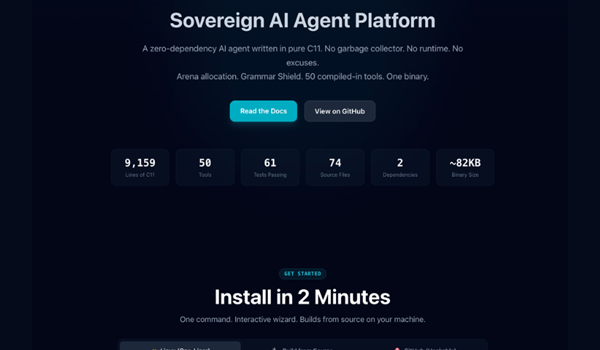
Today marks the conceptual unveiling of the Sea-Claw Engine, a minimalist, dependency-free AI architecture designed to run high-level intelligence on legacy hardware. By rejecting the modern “House of Cards”—the layers of Python libraries, virtual machines, and cloud APIs—Sea-Claw proves that true sovereignty lies in simplicity.

“The world is trying to solve complexity with more complexity,” says the initiative’s lead architect. “We are solving it with transparency. If you cannot read the code, you cannot trust the machine.”

India’s Legacy of Simplicity

Throughout history, when the world has faced systemic chaos, Indian philosophy has often provided answers rooted in fundamental truths rather than elaborate fictions. Sea-Claw applies this ethos to computer science. It replaces the “Black Box” of modern AI with an “Atomic Workshop”:

  • Zero-Dependency Logic: Instead of relying on millions of lines of external code, the engine runs on pure C logic, understandable by a single human mind.
  • Deterministic Security: By using strict “Grammar Filters” derived from Sanskrit-style logic rules, the engine physically blocks malicious data (ransomware) before it can
  • Economic Sovereignty: While Silicon Valley demands $10,000 GPU servers, Sea-Claw enables schools and clinics to run advanced AI on refurbished $300 laptops, democratizing access to intelligence.

A New Career Path for the AI Age

This initiative is not just about software; it is a call to action for the next generation of engineers. It challenges students to move beyond being “Prompt Engineers” or “App Tenants” to become

“Digital Blacksmiths.” The curriculum aims to produce architects capable of building the “Truth Kernels” that will secure the future—code that is formally verified, mathematically sound, and built to last for decades.

As the market floods with AI agents that “hallucinate” actions, the need for a “Sovereign Auditor”—a system that checks the math before moving the money—has never been greater. India is uniquely positioned to build this layer of trust for the world.

About the Initiative

The Sea-Claw project is an open educational and engineering roadmap dedicated to restoring the principles of ownership, efficiency, and determinism to the digital world. It is currently in active development, forging the tools that will allow legacy infrastructure to survive the transition to the age of Artificial General Intelligence (AGI).

Media Contact:

www.oneconvergence.com
vinayak.rao@dkube.io
https://seaclaw.virtualgpt.cloud

Chennai (Tamil Nadu) [India], November 22: Sai University, Chennai, hosted its Second Convocation Ceremony on Friday, October 24, 2025, at its OMR campus. Students, faculty, and distinguished guests attended the ceremony in traditional Indian dress, symbolizing Sai University’s commitment to blending global education standards with Indian cultural values. The ceremony celebrated the graduating class of 2024 from the School of Arts and Sciences (BA/BSc Hons), the School of Computing and Data Science (BTech), and the School of Law (LLM).

Bhubaneswar, India — [11-11-2025]Lex Protector, a global intellectual property consulting firm, has officially launched PatentProtector.ai, an AI-powered platform that enables inventors, startups, and professionals to draft provisional patent applications within minutes.

By combining the precision of legal expertise with the intelligence of AI, PatentProtector.ai simplifies the traditionally complex and time-consuming patent drafting process. It allows innovators to describe their inventions in simple terms while the system automatically generates legally formatted patent drafts, including the abstract, description, and claims.

Democratizing Patent Drafting for All

Filing a patent is often seen as a daunting process — filled with legal jargon, technical formalities, and significant costs. Many inventors and small businesses hesitate to protect their ideas due to these challenges. Recognizing this gap, Aurobinda Panda, Founder of Lex Protector, set out to create a solution that would empower innovators at every level.

“We’ve worked with countless inventors who had incredible ideas but lacked the resources or understanding to protect them,” said Aurobinda Panda. “PatentProtector.ai is designed to break those barriers. Our goal is to make patent drafting simple, fast, and affordable — so that innovation never gets left behind.”

A Blend of Law and Technology

PatentProtector.ai is built using a robust technology stack that integrates OpenAI for natural language processing, Lovable for front-end interface development, and Supabase for secure data storage and management.

This combination allows the platform to provide an interactive and intuitive experience where users can draft, edit, and securely store their patent documents — all within a few minutes.

The platform’s AI engine is specifically tuned for intellectual property language, ensuring outputs are legally structured, technically sound, and ready for further review or filing. Unlike generic AI text generators, PatentProtector.ai understands the precise requirements of patent documents and adapts its output accordingly.

Key Features That Set PatentProtector.ai Apart

  • AI-Powered Drafting: Automatically generates complete, well-structured patent drafts based on simple user inputs.
  • Legal Accuracy: Designed by IP experts to meet Indian and international patent drafting standards.
  • Smart Editing Tools: Allow real-time refinement of AI-generated drafts.
  • Secure Infrastructure: Data privacy ensured through encrypted storage powered by Supabase.
  • Global Compatibility: Supports patent drafts aligned with major jurisdictions including the US, UK, EU, and India.

Making Innovation Accessible

PatentProtector.ai is not just a productivity tool — it’s an enabler of innovation. The platform dramatically reduces the time, cost, and effort traditionally required for preparing patent documentation. What once took hours or days can now be completed in minutes with the assistance of artificial intelligence.

“Our platform empowers inventors to focus on creativity and problem-solving rather than paperwork,” added Panda. “Whether you’re a startup founder, an engineer, or a student researcher, PatentProtector.ai helps you protect your ideas faster and more efficiently than ever before.”

The Vision Behind PatentProtector.ai

The inspiration for PatentProtector.ai grew out of years of experience working with global clients at Lex Protector. Panda and his team observed that even in today’s tech-driven world, patent drafting remains a bottleneck in the innovation pipeline.

By leveraging AI, the team sought to bridge the gap between innovation and intellectual property protection, creating a seamless experience that combines accuracy with automation.

PatentProtector.ai marks a significant step toward the future of LegalTech and AI in Intellectual Property, paving the way for more accessible and efficient patenting processes.

Why It’s Different from Other Tools

While there are many AI writing assistants in the market, PatentProtector.ai is purpose-built for patent professionals and inventors. Its domain-specific intelligence sets it apart from generic platforms. The system not only drafts text but also understands the logic, tone, and structure required for legally compliant patent applications.

Furthermore, its technology is supported by continuous feedback learning, enabling improvements in accuracy and language precision with each interaction.

About Lex Protector

Lex Protector is an internationally recognized law firm specializing in intellectual property protection across patents, trademarks, and copyrights. The firm serves clients globally, including the India, US, UK, EU, and Australia. With a focus on innovation-driven legal solutions, Lex Protector has helped thousands of creators and businesses secure and enforce their IP rights.

Try PatentProtector.ai Today

PatentProtector.ai is now live and open for new users. The platform is free to sign up, allowing users to explore the drafting process firsthand.

To experience how AI can revolutionize patent creation, visit www.PatentProtector.ai today.

Because every great idea deserves protection — powered by PatentProtector.AI.

PatentProtector.ai – Turn Your Ideas into Patents in Minutes with AI

Revolutionary AI-powered patent drafting platform. Generate professional provisional patents in minutes with our intelligent invention disclosure system.

New Delhi, India — 03 November 2025: In a historic step for India’s growing artificial-intelligence ecosystem, Atomesus AI, developed under the leadership of Indus Valley Group, is gearing up for its official launch. The initiative, led by a group of passionate college innovators with research exposure to ISRO-linked projects, aims to make artificial intelligence accessible, affordable, and proudly Indian.

Pioneering Indian Innovation

Atomesus AI blends youthful creativity with deep technical expertise. The team has created a hybrid AI system that merges the precision of machine learning with the adaptability of contextual reasoning — a breakthrough designed to elevate user experience while preserving efficiency and scalability.

Unlike conventional startups that rely entirely on external technologies, Atomesus AI has built a proprietary integration layer combining in-house development with select global AI systems. This approach ensures enhanced performance, privacy protection, and a uniquely optimized platform for Indian and international users alike.

Mission: The World’s Most Affordable AI

Atomesus AI’s mission is clear — to become the world’s most affordable AI platform for everyone. From students and creators to small businesses and enterprises, the platform democratizes access to powerful AI tools once reserved for major corporations.

Its guiding motto, “AI for everyone, from India to the world,” reflects a commitment to inclusion, affordability, and global accessibility.

A Vision of National Self-Reliance

The founders of Atomesus AI envision an India that leads in the field of artificial intelligence. Their roadmap includes launching a fully indigenous AI model, trained and deployed entirely in India using localized data to ensure data sovereignty and technological autonomy.

As part of Indus Valley Group — a forward-looking conglomerate engaged in AI, space technology, Web3, and citizen-security — Atomesus AI stands as a testament to India’s drive toward self-reliance in advanced technologies.

Looking Ahead

The upcoming launch is set to be a milestone in India’s technological journey. With its hybrid framework, cost-effective model, and patriotic vision, Atomesus AI could redefine how AI is developed, delivered, and democratized worldwide.

Global tech analysts and AI enthusiasts are closely watching this development — not merely for another product launch, but for the beginning of India’s AI independence.

Technology & Transparency Statement

Atomesus AI combines proprietary innovations with licensed third-party AI technologies to deliver world-class performance, reliability, and affordability. All systems are compliant with global data-protection and ethical-AI standards.

Media Contact:

Press Office — Atomesus Ai PVT LTD

press@atomesus.com

www.atomesus.com

Headquarters: New Delhi, India

Blending AI innovation with human creativity, IIM alumnus Moynaak creates a soulful tribute to love, nostalgia, and festive spirit right in time for Bengal’s biggest celebration.

Kolkata, India, September 2025 – As West Bengal gears up for the joyous onset of Durga Puja, a new Bengali music video is striking a powerful emotional chord with listeners across the globe. Titled “Aamra Dujon Pandale Jaabo” (We Will Go to the Pandal Together), this heartwarming track, powered by artificial intelligence, is the latest creative offering by Moynaak, an IIM graduate and the current Marketing Head of a prestigious Indian brand.

The song, released on YouTube just days ago (Watch here), is already garnering attention for its peppy nostalgic melody, poetic lyrics, and a pioneering use of AI in Bengali music production.

An Emotional Journey Through Durga Puja Memories

“Aamra Dujon Pandale Jaabo” is more than just a music video. it’s an invitation to relive cherished moments of walking through pandals hand in hand, soaking in the joy of dhunuchi naach, dhaak beats, and the aroma of shiuli flowers. Through its melancholic yet hopeful tune, the song captures the essence of romantic nostalgia and the emotional pull of Durga Puja, a time when lovers reunite, friends reconnect, and the city comes alive.

Whether you’re in Kolkata, London, or New Jersey, the song feels like a familiar story, one that every Bengali heart holds dear.

The Mind Behind the Music: Moynaak, The Marketer-Musician

At the helm of this unique project is Moynaak, a rare combination of artistic sensitivity and strategic thinking. An Indian Institute of Management (IIM) alumnus, Moynaak currently leads marketing for one of India’s most respected brands. But beyond boardrooms and brand plans lies his passion for storytelling, music, and now, the intelligent use of AI in creative arts.

“I’ve always been fascinated by the idea that machines can learn from us, understand our emotions, and ultimately enhance human creativity,” Moynaak says. “This song is a testament to how AI, when guided with the right intent, can help us create something deeply human.”

How AI Played a Role

The music video is not just a traditional composition; it is one of the first Bengali AI-enhanced music projects to blend machine intelligence with human emotion. From voice modulation to melodic structuring, Moynaak integrated various AI-assisted tools to streamline composition, instrumentation, and vocals.

Unlike many generative art experiments that feel robotic or impersonal, “Aamra Dujon Pandale Jaabo” has received praise for its authentic feel, rich narrative, and emotional resonance. That’s because, as Moynaak emphasizes, “AI is just a tool; it’s the human behind the algorithm who brings the magic.”

Audience Reactions & Early Impact

The song has already struck a chord on social media, with hundreds of shares and heartfelt comments pouring in across platforms. Many are calling it the “official anthem of Pujo love in 2025.” Several users shared stories of how it reminded them of first love, college days, or Durga Pujas they celebrated far from home.

Popular Bengali bloggers and indie music curators have also taken notice, praising Moynaak’s bold vision in blending tradition with technology.

What’s Next for Moynaak?

This is not the end,it’s the beginning. Moynaak plans to continue exploring AI in music and storytelling, especially in underrepresented languages like Bengali. His mission? To prove that technology, when rooted in cultural memory and artistic intention, can preserve and even amplify the emotional richness of our heritage.

He is also in talks for collaborations with other indie musicians and AI developers, aiming to build a creative collective at the intersection of art, emotion, and machine intelligence.

Where to Watch & How to Support

The music video “Aamra Dujon Pandale Jaabo” is now streaming on YouTube:
Watch Now
Like, Comment, and Subscribe to Moynaak’s channel to support more indie AI-infused music from Bengal and beyond.

For press inquiries, collaborations, or interviews, contact:
moynaak.s@gmail.com
Instagram: @moynaak
YouTube: Moyraaj Productions

About Moynaak

Moynaak is an IIM alumnus, marketing leader, and independent musician and creative director known for blending art with innovation. His work aims to challenge creative boundaries and celebrate cultural storytelling in the age of artificial intelligence.

Noida (Uttar Pradesh) [India], July 5: In a major push to democratize access to executive-level AI education, IIBM Institute of Business Management have announced the launch of a Free Certified Mini MBA in Artificial Intelligence. This powerful one-day global learning event, led by IIBM ‘s Faculty, aims to upskill professionals around the world in cutting-edge AI tools and leadership principles.

Designed to break educational and geographic boundaries, the Mini MBA will deliver essential insights into artificial intelligence, strategic thinking, innovation, and responsible leadership–all in a condensed, high-impact format. Participants will receive a globally recognized certificate issued by IIBM Institute, validating their knowledge and advancing their career potential.

Dr. Vidhi Maheshwari, International Academic Head of the IIBM Institute, emphasized the ethical and inclusive vision behind the initiative:

“AI is the new language of business. With this initiative, we are giving people around the world the opportunity to gain cutting-edge AI insights in just one day–and for free,” said Vidhi Maheshwari, IIBM Institute. “We believe in democratizing education to prepare professionals for what lies ahead.”

The one-day virtual program will feature global experts, industry case studies, and practical tools that participants can apply immediately in their careers or ventures. Upon completion, attendees will receive a globally recognized certificate, issued by IIBM Institute.

The event, expected to host thousands of learners from more than 50 countries, marks a milestone in international education partnerships. Already, over 1,000+ learners from 15+ countries have shown interest. From working professionals in Europe and Southeast Asia to students in Africa and South America–this is truly a borderless classroom fostering AI-driven leadership.

“We launched this Free One-Day Mini MBA in AI to make advanced business learning accessible to everyone–no matter where they are in their career or in the world. Our goal is simple: empower people with real, future-ready skills that can make a difference – said Vikas Maheshwari, CEO of IIBM Institute.”

Registration is open now via the official IIBM Institute websites. Participation is free, but time is limited — we encourage you to register at the earliest.”

Apply Now: https://forms.gle/TWEivrTTNv3TK2GG6

Visit our Website: www.iibmindia.in

Email: administration@iibmindia.in

Contact: +91 93191 23456

ProX PC, a leading provider of custom computing solutions, is redefining the landscape of AI technology in India. With innovative hardware offerings and unparalleled support, the company has successfully implemented the largest AI-driven project across the nation, onboarding over 200,000 cameras for a major client in the oil and gas sector. ProX PC serves both government sectors and B2C markets, achieving a turnover of ₹8 crore in the fiscal year 2023-2024.

New Delhi, India – ProX PC, a pioneer in the field of high-performance computing hardware, is transforming the Indian AI industry with its state-of-the-art solutions. Founded by Arun Kaushik, the company has carved a niche for itself by providing custom-built hardware tailored to meet the complex demands of AI, edge computing, and high – performance data processing.

In an era where Artificial Intelligence is driving major transformations across industries, ProX PC has emerged as a reliable partner for organizations aiming to harness the power of AI for real-world applications. Recently, ProX PC played a pivotal role in deploying one of the largest AI projects in India, onboarding over 200,000 surveillance cameras for a leading player in the oil and gas industry. This project required high-end, scalable computing solutions capable of real-time data processing and analysis—a need that ProX PC met with its advanced AI-optimized servers and edge computing devices.

“At ProX PC, our mission is to empower organizations with the right tools to unlock the true potential of Artificial Intelligence,” said Arun Kaushik, CEO and Founder of ProX PC. “Our custom hardware solutions are designed to handle the massive computational workloads that AI demands, ensuring that our clients can innovate faster and more efficiently.”

ProX PC’s expertise extends across multiple industries and use cases. For the government sector, the company provides high-performance servers and edge AI devices that are designed to handle mission-critical tasks in surveillance, defense, and public safety. For B2C markets, ProX PC offers premium workstations for professionals in fields such as content creation, video editing, architectural design, and scientific research, ensuring that creatives and scientists have the computational power they need at their fingertips.

The company’s product portfolio includes a diverse range of configurations, from high – powered multi-GPU servers to versatile edge computing solutions. All of ProX PC’s products are crafted with a focus on high-performance AI workflows, enabling customers to drive innovation across sectors.

ProX PC’s financial growth reflects its increasing impact on the technology industry in India. In the fiscal year 2023-2024, the company achieved an impressive turnover of ₹8 crore, a testament to the quality and demand for its solutions. This growth also underscores the company’s dedication to supporting India’s digital transformation goals by providing world-class computing hardware solutions.

As ProX PC looks to the future, it remains committed to pushing the boundaries of what’s possible in AI. The company continues to invest in cutting-edge technology to ensure that its clients—whether in government, corporate, or consumer sectors—have access to the latest advancements in computing.

For more information on ProX PC’s products and solutions, please visit www.proxpc.com.

About ProX PC:

ProX PC specializes in custom-built computing solutions tailored for high-performance workflows, including AI, scientific computing, and content creation. With a mission to empower innovation across industries, ProX PC provides premium workstations, servers, and edge AI devices designed to meet the unique needs of professionals and organizations alike. ProX PC is headquartered in New Delhi, India, and serves both B2B and B2C markets, supporting government agencies, large corporations, and individual professionals.

ITM (SLS) Baroda University, Vadodara, successfully organized CRE8-24: The Art and Science of Innovation at its university campus on Friday, 4th October. The event witnessed participation from over 1,000 students hailing from more than 30 prestigious schools.

CRE8-24 featured a diverse lineup of activities aimed at promoting science, technology, and innovation among young students. Key competitions included Working and Static Model Displays, Shark Tank Junior, Scavenger Hunt, and a Management Quiz. In addition, workshops on trending topics such as ChatGPT, Artificial Intelligence, Robotics, Cyber Security, Data Analytics, and Eco-Craft were conducted, providing participants with hands-on learning experiences.

The event was judged by an esteemed panel, including Dr. A. K. Tiwari (Ph.D., IIT-Bombay), Shri Jaimin Desai (Deputy Director, SAC-ISRO), along with other distinguished academicians and senior industrialists from Vadodara.

Students showcased innovative models ranging from robotics, wind turbines, earthquake detectors, water purification systems, to automated irrigation systems. CRE8-24 was designed to ignite a passion for science and innovation at an early age, encouraging students to continue their journey toward making significant contributions to the nation’s progress in these fields.

After a comprehensive evaluation, cash prizes totaling Rs51,000, along with trophies and certificates, were awarded to the winning participants. All attendees received participation certificates.

The event concluded with a closing address by Shri Jaimin Desai, Deputy Director of SAC-ISRO, who expressed his gratitude to the university’s management, congratulated the participants, and extended an open invitation for them to visit SAC-ISRO in Ahmedabad.

University President Shri Kanupriya Singh remarked, “The students have showcased tremendous potential and are ahead of their time in terms of their passion for science and innovation. These students can make a mark on the global stage, provided they are given platforms like CRE8.”