
Connectivity Without Intermediaries: What Unites BRICS, Asia, and the Global South
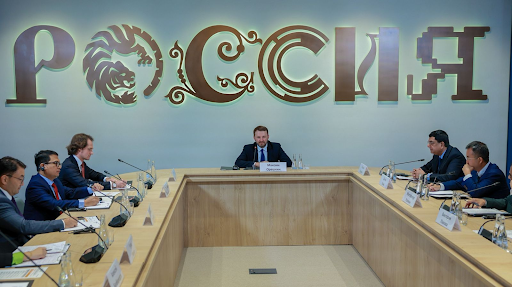
In Vladivostok, a discussion on new financial and investment solutions for countries of the World Majority was held as part of an Open Dialogue at the branch of the National Centre “Russia”. The session was moderated by Maxim Oreshkin, Deputy Head of the Administration of the President of the Russian Federation.
During the third discussion block on “New Financial and Investment Mechanisms for the World Majority,” participants emphasized that in a changing global economy, sustainability cannot be ensured without digital integration and the development of compatible payment systems.
Speaking at the session, Ilya Ivaninskiy, Director of the Center for Business Education and Analytics at the Central University, emphasized that without investment, real market connectivity is impossible.
“Connectivity doesn’t work well without money,” he noted, reminding that developing countries now form the center of the global economy: they account for over 60% of global GDP and more than 90% of the planet’s population. According to him, future economic growth is concentrated precisely here.
At the same time, Ivaninskiy noted, the international monetary and financial system has not yet adapted to this reality:
“Neither payments, nor representation in organizations, nor reserves, nor investments — no component corresponds to the new conditions.”
The global investment deficit is estimated to exceed $4 trillion, and the problem is felt most acutely in Global South countries.
The speaker explained in detail the reasons behind these difficulties. In developing countries, investments are largely built on borrowed funds:
“Our debt-to-equity ratio is 2 to 1, while in developed countries it’s 1 to 1.” Moreover, a significant portion of the debts are short-term, with about 40% due for repayment as early as 2027. The cost of capital is also unfairly inflated. “If our risk is higher by 1.5%, then the cost of capital is higher by 6.6%. This is four times higher than the actual risk level,” he emphasized.
Another problem cited by the expert is low market connectivity: most foreign investments coming into developing countries are from developed ones, and vice versa — the main investments from the Global South flow into developed markets.
“When we see a low degree of connectivity in the 21st century, a logical solution is a new investment platform,” stated Ivaninskiy.
In his opinion, such a platform could connect BRICS countries and the global majority. It should include a showcase of long-term infrastructure projects, clear criteria for assessing quality for investors, and effective risk reduction tools.
“Governments can help by buying junior tranches or providing guarantees,” he noted.
Ivaninskiy proposed a two-tier architecture for the platform: at the national level — selection of projects and investors; at the international level — mutual investments and offsets.
He also drew attention to technological capabilities:
“Blockchain is already mentioned as a tool for making payments and settlements. Modern digital tools make such operations cheap and transparent.”
According to him, a digital investment asset — risk-free and protected from inflation — could be at the center of the platform.
The expert also provided economic calculations: if countries invest at least $10 billion annually, it could generate up to $100 billion in additional GDP per year.
“For economies with a combined GDP of over $60 trillion, such investments are insignificant, while the effect could amount to a quarter of a percent of global GDP,” he noted.
“It’s great that we are discussing such initiatives at these venues. I would like to believe that this will allow them to be implemented faster,” Ivaninskiy concluded.
